What are the common problems in frog farming? Learn them all in one article
Frog farming is a fairly popular industry right now, but many farmers do not really understand the overall habits of frogs, so they often make some mistakes that lead to reduced yields later on. Based on feedback from many farmers, we have put together some of the common problems to list for you. Let's take a look below!
1. Mixed farming of tadpoles
The first is tadpole rearing. Because tadpole fry are rather fragile and easily die, some farmers, when they find a large number of dead tadpoles in the early stage, will bring in stock and mix them together. In fact, this is a mistaken way of thinking. You do not know what the newly introduced tadpoles went through before, and they will be somewhat incompatible with the tadpoles already in the original pond; the two may even come into conflict and cause deaths. If deaths occur after introducing new tadpoles, and in large numbers, this is the reason. So if you are restocking, the best approach is still to put them in a separate pond; only then will the restocking work well!
2. Too many rounds of disinfection
Frogs themselves carry a lot of bacteria, so they are prone to disease. Some farmers hold a rather stubborn idea, namely that repeated disinfection can solve this problem. So some farmers keep sterilising and disinfecting during the tadpole stage, and then keep disinfecting during the seedling stage. Doing this causes more and more harmful residues to build up in the frog pond, which in the end seriously affects the growth of the frogs and can even cause death. Keep firmly in mind that disinfection should be done in moderation; going beyond the limit is as bad as falling short!
3. Excessive density
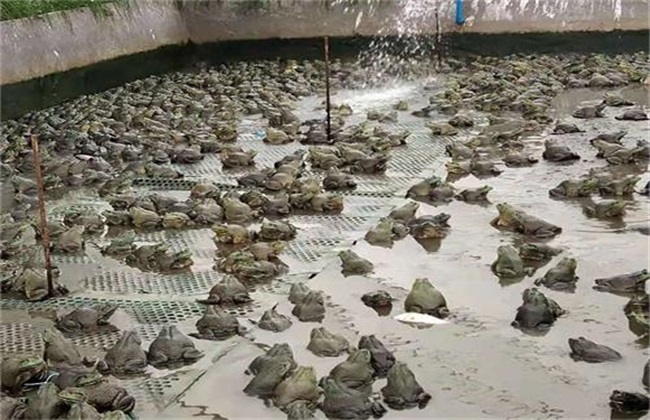
Generally speaking, frogs are farmed in one big pond, so in the eyes of some farmers density becomes a factor that is rather overlooked. In fact, it is just the opposite: density has a great impact on frog farming. Normally, it is fairly ideal for the frogs in a pond to be spread out over roughly one third to two thirds of the area. When frogs are frequently seen piled up together in clusters, that means the density is too high and some should be separated out in time. With high density, problems in farming efficiency and mortality rise sharply.
4. Poor water quality
Water quality is a problem that people easily overlook. The water used for farming frogs is not unchanging either. Because the frogs in the pond soak in the water for long periods and most of their excrement dissolves in the water, the water quality easily deteriorates. Generally speaking, frog ponds should have their water changed about once every 3-5 days depending on the situation, keeping the pond water fairly clear at all times. Frog ponds like this have a much lower incidence of disease.
Farming is about making use of the factors that people easily overlook and then improving and optimising them, so that your own farming results have a much better chance of surpassing others'. The above are the fairly common problems in frog farming. I hope everyone can adjust their own farming methods accordingly!