How to grow a potted clivia? Growing methods and care management key points
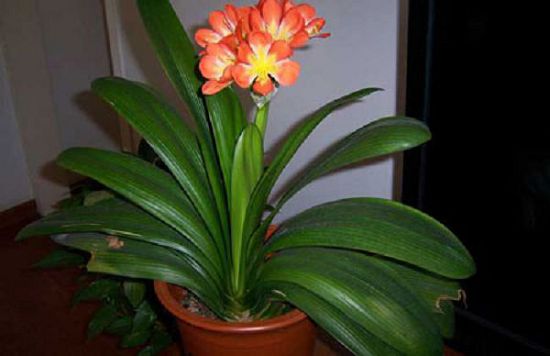
Growth habits of clivia
Clivia is native to the subtropical mountain forests of southern Africa, growing beneath trees. It fears both heat and cold, prefers a semi-shaded and humid environment, and dreads strong direct sunlight. The optimal growing temperature is between 18 and 28°C; growth is inhibited below 10°C and above 30°C. It likes a ventilated environment and prefers deep, fertile, loose soil, and is suitable for growing in loose, fertile, slightly acidic organic soil.
Propagation methods of clivia
1. Sowing: Before sowing clivia, soak the seeds in warm water at 30-35°C for 20-30 minutes, then take them out, air-dry for 1-2 hours, and sow them into the growing medium. After sowing, place the pot in an environment at room temperature of 20-25°C and humidity of about 90%, and the radicle will sprout in about 1-2 weeks. There are many materials that can be used for the growing medium, but one that is relatively easy to obtain is loose soil taken from the forest surface layer with sufficient humus, mixed with 1/3 clean fine sandy soil.
2. Division: When dividing clivia, first take the mother plant out of the pot, remove the old soil, find the axillary buds that can be divided, and break off the offsets; never force them off, so as not to damage the young plants. After cutting off the offsets, immediately coat the wounds with dry charcoal powder to absorb the exuding fluid and prevent rot. Then plant the offsets in pots; generally it takes 1-2 months to grow new roots and 1-2 years to bloom.
How to grow a potted clivia?
1. Soil: The native habitat of clivia is under large trees in the forests of the high-altitude regions of southern Africa, where the root system is anchored in leaf litter layers accumulated over many years. For clivia cultivation, loose and fertile neutral or slightly acidic humus soil should be used. The growing soil can be mixed with 65% humus soil, 20% clean sand, and 15% fine furnace ash, and the relative humidity should preferably be around 40%.
2. Fertilizing: Clivia should be given a solid fertilizer once in winter, with less nitrogen fertilizer and more phosphorus and potassium fertilizer. Eggshell powder and fermented fishy water are good phosphorus fertilizers, while bran ash and tobacco ash are readily available potassium fertilizers. A compound fertilizer of nitrogen, phosphorus, and potassium can also be applied to promote the sprouting of more new plants and leaves. Fertilizing must be done in appropriate amounts, and it is essential to avoid applying concentrated fertilizer or raw fertilizer that has not been fermented and decomposed, otherwise it can easily cause scorched or rotten leaf tips.
3. Watering: Clivia should not be too dry or too wet. Each watering must soak through, and after budding it should be watered a bit more. About every 20 days, combine watering with applying fermented soybean cake water, diluted fishy water, or water from boiled water chestnuts, combining watering and fertilizing. When the room temperature is low, watering should be controlled to prevent the potting soil from becoming too wet; overly wet potting soil can cause root rot and death of the plant, but the potting soil should not be allowed to become too dry either.
4. Temperature: The most suitable growing temperature for clivia is 15-25°C. Growth stops at 10°C, and frost damage occurs at 0°C. Therefore, in winter it must be kept warm and protected from freezing. After the flower stem is drawn out, maintaining around 18°C is preferable. If the temperature is too high, the leaves and flower scape will grow excessively and become thin and spindly, the flowers will be small and poor in quality, and the flowering period will be short. If the temperature is too low, the flower stem will be short, which can easily cause the flower scape to be trapped and bloom prematurely, affecting quality and thereby reducing ornamental value.
5. Light: Clivia is a medium-light plant. During growth, diffused light is best; strong light is not needed during growth, and especially in summer direct sunlight must be avoided. Appropriate shading is beneficial to leaf growth. If the winter flowering period encounters strong light, the flowering period will be shortened. Medium light can extend the flowering period. If earlier flowering is desired in winter, short-day treatment can be used.
Four-season management of clivia
1. Spring: In early spring, after clivia has passed through winter dormancy, the root system begins to revive. Due to a lack of nutrient supply, — after exposure to wind and sun, the leaves will show dehydration, causing their gloss to fade and their hardness and thickness to decrease; in severe cases, yellow leaves, rotten leaves, and similar conditions may even occur. Therefore, it is enough to keep the potted plant generally moist; too much watering can easily cause root rot. Before the scape emerges and blooms, avoid spraying water. Apply fully decomposed liquid fertilizer once a week or once every half month, but follow the principle of light fertilizer applied frequently, and strictly avoid concentrated fertilizer or raw fertilizer to prevent leaf scorch and root rot.
2. Summer: Clivia is not strict about light; it likes semi-shade and fears direct light. Because summer air temperature and soil temperature are relatively high, the root system is prone to disorder, leading to unbalanced nutrient absorption and phenomena such as neck stretching and leaf bolting. In addition, due to intense sunlight, transpiration is greatly increased. If watering is improper, the leaf color may become dull and scorched yellow, or even wilt.
3. Autumn: After the beginning of autumn, the climate gradually turns cooler. During periods of continuous autumn rain, mature clivia have more opportunities to cut the scape and set seeds and to send up scapes and bloom. If they are exposed to rain or watered too much at this time, root rot, scape rot, and heart rot may occur. Therefore, when the scape emerges and blooms, avoid spraying water. About every half month, water once with decomposed soybean cake fertilizer water (1:3). When watering, prevent water from entering the center of the leaf rosette, and do not let rainwater pour into the leaf rosette either, so as to avoid rotting of the core. In severe cases, the entire plant may even rot and die.
4. Winter: In winter, when clivia is at a low temperature below 5°C, the potting soil must be kept at about 70% moisture so it will not be frostbitten due to dryness. If the moisture is less than 20%, it is prone to dry freezing and death. Before Frost's Descent, indoor plants should be placed in a sunny spot indoors, and attention should be paid to freeze protection and warmth. About every half month, the potted plant can be rotated 180 degrees. When the indoor temperature is kept at 6-7°C in winter, it can overwinter safely. When clivia enters dormancy, water evaporation will relatively decrease, and the potting soil only needs to remain moist, but it is preferable for it to be on the drier side.