Detailed Explanation of Soilless Cultivation and Breeding Techniques for Orchids
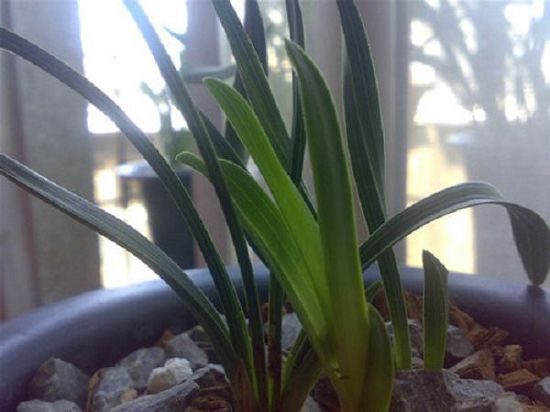
Soilless cultivation of Chinese orchids has been the most popular cultivation method internationally in recent years. The growing media used in soilless cultivation are light in weight, do not carry fungi or insects, and will not splash mud or sand or pollute the environment when watering and fertilizing. Moreover, the media for soilless orchid cultivation are especially coarse, with strong drainage and aeration performance, which can effectively prevent root rot caused by waterlogging damage. Therefore, orchid plants cultivated by the soilless method have strong root clusters, vigorous growth, few pests and diseases, older leaves that thicken, new leaves that are short and wide, leaf tips that do not wither and yellow, a high germination rate, and a high flowering rate. They can be displayed for cultivation indoors or displayed for cultivation outdoors.
I. Growing media.
The growing media for soilless cultivation of Chinese orchids can be divided into two major categories: organic media and inorganic media:
1. Organic media are divided into two types: hard media such as tree fern fiber and rotted tree bark, and soft media such as charcoal, rice husk, sphagnum moss, and coconut coir. Organic media are generally rinsed with clean water, then spread outdoors to be exposed to the blazing sun or sterilized with high-temperature steam for 2 hours; they can also be soaked in 5% limewater for 24 hours, then taken out, rinsed clean, and sun-dried for later use.
2. Inorganic media are divided into three categories: (1) Sand and stone type: volcanic stone, weathered stone, high-phosphorus stone, pumice, vermiculite, perlite, coarse river sand, small stones from riverbanks, etc. (2) Fired type: hollow ceramsite, fragments of bricks and tiles, ceramic kiln soil particles, etc. (3) Plastic type: foamed plastic blocks, foamed plastic strips. Inorganic media generally require no disinfection; simply rinsing with clean water to remove dust is enough. However, fired-type media must be soaked in water for 24 hours to remove the fire energy.
Soilless media have low moisture-retention performance and do not contain high nutrients, easily lose water and fertilizer, and easily cause poor growth; some soilless media are hard and heavy and often hinder orchid root growth. Therefore, soilless media need appropriate blending. The general formula is 70% inorganic media and 30% organic media. Alternatively, organic media alone can be used, with a specific formula of 30% tree materials, 10% stems and leaves, 10% waste residue, 10% seed shells, and 40% charcoal.
II. Water management.
In terms of water quality, the water for watering orchids should be clean, warm and cool, with a pH value of 5.2-6.5 being most suitable. In cities, tap water is generally used after being left standing for two days. The substrate of soilless cultivation generally has poor water retention, so in cultivation management, in order to promote the growth of Chinese orchids, a large amount of water must be supplied many times a day. The amount of watering must vary depending on the season, temperature, sunlight, physical properties of the medium, and wind volume. When light is strong, wind volume is large, humidity is low, and temperature is high, the orchid plant itself has a high water demand, and it must be watered once in the early morning and once in the evening; immediately after watering, keep the leaves dry and do not let water droplets remain on the leaves. Otherwise, the leaves or leaf tips will develop scorched and withered symptoms. Even during the cold winter dormancy period of Chinese orchids, water once a day; in early winter and late spring, water once in the morning and once in the evening each day; in the growth periods of midsummer and golden autumn, water once each in the morning, noon, and evening every day, and frequently spray water on the ground and leaves to increase humidity.
III. Fertilizer management.
Soilless cultivation of orchids generally uses inorganic fertilizers, mainly nitrogen fertilizer, phosphorus fertilizer, and potassium fertilizer, as well as some compound fertilizers. At present, quite a few orchid growers use Magic Fertilizer and Hi-Control. Magic Fertilizer is a long-acting slow-release safe solid granular fertilizer that can automatically control nutrient content; one application can have a fertilizer effect lasting up to two years, and its ratio of nitrogen, phosphorus, potassium, and magnesium is 6:40:6:15. Hi-Control is a long-acting multifunctional compound fertilizer made by coating high-unit compound granular fertilizer with a special resin, and its ratio of nitrogen, phosphorus, and potassium is 14:12:14. Fertilization methods include base fertilizer and topdressing. The fertilizers used as base fertilizer can be Magic Fertilizer and Hi-Control; when potting the orchids, apply a certain amount according to the guidance in the fertilizer instructions. Magic Fertilizer is generally 5 grams per 4-inch pot, and Hi-Control is generally 3-3.5 grams per 5-inch pot; combining this with foliar spraying fertilizer at ordinary times gives even better results. Topdressing can be divided into root application and foliar application. Root application can be done 3 times a month, and can be applied from April to November. Foliar application, that is, leaf spraying, is highly scientific, simple, and low in cost, can avoid burning roots, and has remarkable effects. A relatively effective formula is 1 gram of urea and 1 gram of monopotassium phosphate, mixed and diluted 2000 times with water; after fully dissolving, spray onto the leaves. At present, a relatively good product in production is Hyponex produced in the United States; Hyponex No. 1-5 can be sprayed according to different growth stages of orchids. Foliar spraying must follow the principle of applying thin fertilizer frequently.
IV. Precautions for using fertilizer:
1. Chinese orchids can be fertilized during the growth periods of spring, summer, and autumn, and generally are not fertilized when entering the winter dormancy period.
2. Adhere to the principle of applying thin fertilizer frequently, avoid applying concentrated fertilizer, and avoid burning roots and damaging seedlings. When applying fertilizer, follow the proportions in the fertilizer instructions.
3. The required ratios of nitrogen, phosphorus, and potassium for Chinese orchids at different growth stages are: seedling stage 3:1:1; mature seedling stage 1:1:1; flowering stage 1:3:1.4. The suitable temperature for fertilization is 18-25°C. Fertilization is generally carried out in the evening. Foliar fertilizer should preferably be applied at around 9 a.m.