What should I do when Sedum rubrotinctum (pork and beans) grows aerial roots?
Sedum rubrotinctum has a beautiful plant form, gentle leaf color, and a round, glossy look, making it one of the must-have varieties for many succulent lovers. However, many people find during cultivation that Sedum rubrotinctum has grown many aerial roots. So what is going on here? Come take a look with the editor at how to deal with aerial roots on Sedum rubrotinctum.
1. What are aerial roots?
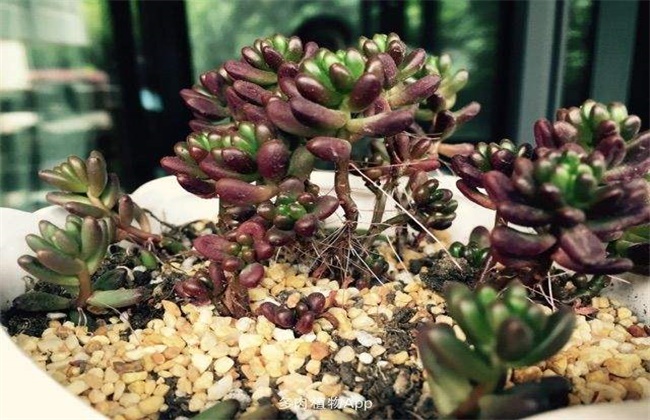
To solve the problem of aerial roots, we first need to understand what aerial roots are. Aerial roots are roots that grow from the stems of succulent plants exposed to the air. Because they leave the soil and absorb water and air from the air, they are called aerial roots. And since a succulent plant has grown aerial roots, it means there is not enough water and oxygen in the soil for its growth. It may also be that the surrounding environment is relatively humid and it is currently the growing season for succulents, so in order to absorb more, this is also a common phenomenon. However, usually not many grow, and most are concentrated on the lower half of the plant. In this situation, there is generally no need to do anything, and as the environment changes, these aerial roots will gradually dry up and fall off.
2. Soil compaction
Once you know the reasons aerial roots occur, you need to analyze the specific cause of their formation. So the most likely cause is soil compaction. To check whether the soil is compacted, just insert a toothpick. If it is not easy to insert, the surface of the soil begins to turn white and clump, and cracks appear after a long time without watering, then it is compacted. When soil is compacted, roots find it hard to take hold, new roots do not grow well, and old roots cannot move smoothly, so naturally there will be a lack of water and oxygen, and aerial roots will grow.
Solution: Break it up, trim the roots and let them dry for two days, then after the root wounds heal, repot in moist soil, and make sure the new soil is loose and breathable.
3. Root rot
Root rot is also one of the reasons Sedum rubrotinctum grows a large number of aerial roots. If the leaves of Sedum rubrotinctum are consumed quickly and there are also many aerial roots, it is estimated that the area of root rot is already quite large.
Solution: At this point, root trimming is needed, and then repotting. Root rot must be dealt with promptly. It is similar to treating soil compaction: trim the roots, let them dry, and then repot. But if the root rot is relatively severe, the wounds need to be disinfected and sterilized, then dried, and all rotten roots must be cut off completely; otherwise, secondary contamination will occur.
The above is an introduction to what to do when Sedum rubrotinctum grows aerial roots. I hope it can help you. If you want to learn more related knowledge, please follow us.