How to care for clivia in autumn? Master these methods
Clivia is a semi-shade plant. In autumn the temperature is suitable and light intensity decreases, so it is exactly the right time to grow clivia. What needs attention when growing clivia in autumn, and how to carry out the corresponding management work. What the key points of management are, the article will mainly give a relevant introduction.
1. Increase fertilizer and water
After entering autumn, clivia will wake from dormancy and begin to grow, so it needs more watering to help it resume growth. Ordinary water can be used, but tap water needs to be left standing before use. As it grows, it also needs more fertilizer; use liquid fertilizer or compound fertilizer, generally applying fertilizer about twice a month. Water before fertilizing to avoid a sudden rise in the soil solution concentration that burns the roots.
2. Repotting
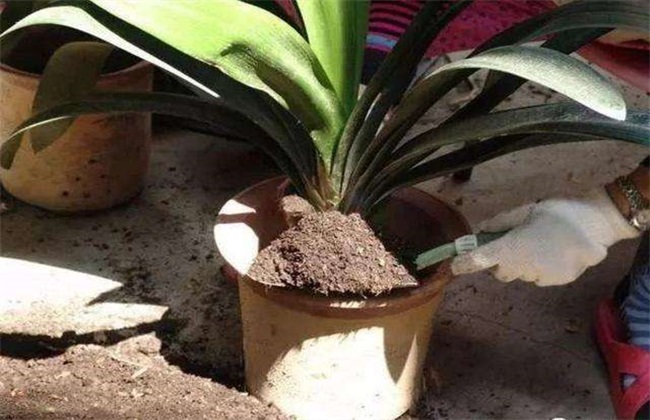
If you did not repot during the spring growing season, the root system has probably already filled the pot, so now it needs repotting, and the soil fertility conditions also need to be improved. Mix some nutrient soil for planting, using peat, river sand, vermiculite, and leaf mold from under sparse woods. Change to a larger flowerpot to give the roots enough growing space. If new shoots have grown at the base, they can be cut off and cultivated into new plants.
3. Watering principles
Do not water if the soil is not dry; when watering, be sure to water thoroughly, so that all roots are reached by the water, otherwise uneven growth will result. Do not fail to water thoroughly in one go, as the roots may not absorb any at all and only the soil will be moist. When the soil temperature rises noticeably while the water temperature is low, do not water; use water of the same temperature for irrigation. Do not water under strong light at noon, and do not pour water into the heart of the plant, as it easily rots.
4. Soil requirements
Because the clivia root system is a fleshy root, the roots cannot grow in a sticky, compacted, waterlogged environment, and the plant will also be affected, so it is best to plant in fertile soil with good aeration, granular structure, and good permeability. Pine needles and charcoal have a loosening effect, and the rotted leaves of pear and apple trees have good permeability, so they can be used.
For clivia, autumn is a season suitable for growth, so it is best to provide the best cultivation conditions to help clivia grow well and have more growing space.