Causes and solutions for brown spots and yellowing in Clivia (Clivia miniata)
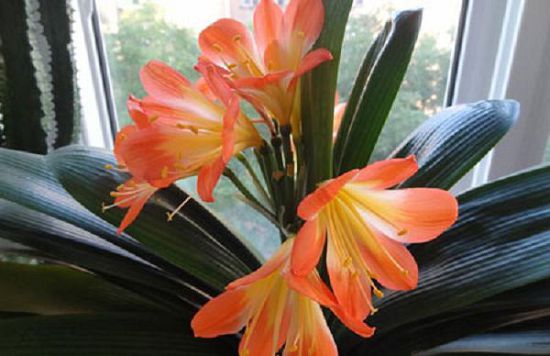
When spots and yellow leaves appear on Clivia leaves, the plant may be sick, for example with leaf spot disease or chlorosis. Under normal circumstances, a Clivia leaf survives on the plant for about three years, then the old leaf turns yellow, ages and falls off naturally. This is the normal natural process of Clivia growth and metabolism and has no side effects on the plant. However, when spots and yellow leaves appear on new leaves, that is, leaves that have not yet reached maturity, it is abnormal, and the plant may have leaf spot disease or chlorosis. Below is an introduction to the causes of spots and yellowing on Clivia leaves and how to deal with them!
Common causes of spots on Clivia
1. Fertilizer that has not been fully fermented was applied. This causes pathogens to multiply in large numbers in the potting soil.
2. The potting soil has not been changed for a long time, and the stale soil contains disease-causing bacteria.
3. The new soil used for repotting is raw and not fully fermented, so it undergoes a second fermentation in the pot.
4. The nitrogen, phosphorus and potassium in the fertilizer are unbalanced, especially when there is too little potassium fertilizer, or when the fertilizer directly touches the roots during application.
Prevention and control methods for spots on Clivia
For spots on Clivia, different methods should be adopted according to the specific cause to prevent and completely cure the problem. Fertilizer applied must be fully fermented, the fertilizer concentration must be low, and nitrogen, phosphorus and potassium must be balanced. Replace the fully fermented nutrient soil twice a year, in spring and autumn, and do not use raw soil. In this way, leaf spots can be eliminated.
Common causes of yellowing in Clivia
1. Part of a leaf turns yellow, and the position of the yellowed area is irregular. The main causes are sunburn on the leaf surface from direct sunlight, cold wind, or pathogen spread at sites bitten by pests such as slugs and snails, or enlargement of wounds after injury.
2. The leaf tip turns yellow first and the yellowing gradually spreads toward the pseudobulb. The main cause is root rot, which interrupts the nutrient supply to the leaf, so yellowing starts from the leaf tip and moves toward the pseudobulb. This phenomenon can also be caused by excessive fertilizer concentration, the use of raw soil, or poor soil quality.
3. The pseudobulb area turns yellow first and the yellowing gradually spreads toward the leaf tip. The main cause is pest damage biting the leaf base at the pseudobulb, causing the yellowing to gradually extend to the tip, or water accumulating at the pseudobulb in summer and bacteria multiplying there, causing localized yellowing of the leaf.
4. The entire leaf turns yellow simultaneously from base to tip. The causes of this situation are relatively complex, mainly due to improper management, such as poor ventilation and excessive water in summer, excessive fertilization, or problems with the roots, all of which can cause the whole leaf to turn yellow.
Prevention and control methods for yellowing in Clivia
First, prevent root rot so that the leaves can receive sufficient nutrients. Second, eliminate external injuries and prevent wounds from spreading. The amount of fertilizer applied must be well controlled, and excessive fertilizer must be avoided. In summer, do not water mature large plants at the pseudobulb. In summer, pay attention to ventilation, lower the temperature, strengthen management, and regularly spray fungicides such as carbendazim, chlorothalonil, thiophanate-methyl and agricultural streptomycin for prevention and control. This can reduce and eliminate the occurrence of these symptoms.