How to grow living stones? A detailed guide to living stone cultivation methods
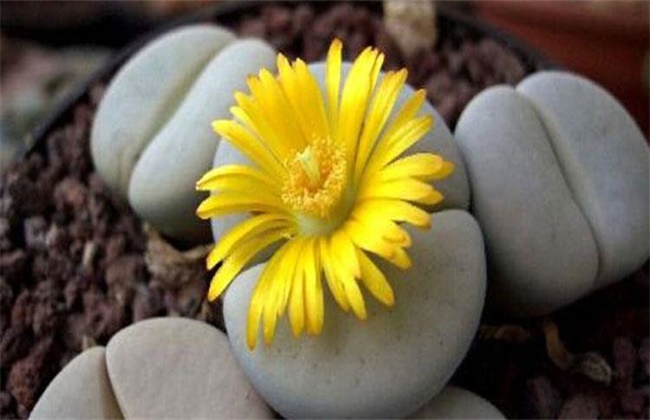
Because of its peculiar appearance, the living stone looks very much like a flower blooming from a stone, so it was named "living stone." It is also called "living rock," and is also known as butt flower, stone grass, stone flower, and so on. It has a small stature and is one of the more popular small succulents in recent years, so how should it be cultivated? Let's take a look together.
1. Soil
To grow living stones well, you must first choose a growing medium suitable for them. Living stones like loose, breathable soil with good water retention. If the soil's breathability is poor, it may cause the plants to rot, so you should choose a granular soil to increase breathability. You can mix one-third easily available coarse river sand, one-third vermiculite, and one-third leaf mold to make a suitable growing medium. To ensure better growth, you can add an appropriate amount of bone meal as a base fertilizer when preparing the growing medium.
2. Temperature
Living stones like to grow in a warm climate of 15-25 degrees, and the temperature must not be higher than 28 degrees, otherwise the living stone will enter a dormant state, so in summer you must control the temperature well and not place it in a high-temperature environment. The cold resistance of living stones is also relatively poor, so in winter they should be kept indoors and the temperature should be maintained above 8 degrees to prevent the plants from freezing. In summer, with high temperatures and strong light, place them in a ventilated spot with scattered light; it is not suitable to place them in direct sunlight, otherwise the plants will be sunburned. In spring and autumn, let them receive full sun, and in winter place them in a warm spot to receive light.
3. Watering
Do not water living stones too frequently, because they do not like water very much. If watered too much, it may cause root rot, and may also cause moss to grow around them, all of which will affect their normal growth. Usually you only need to make sure the top window of the plant has a certain firmness and does not dent when touched. That is to say, when the top window of the plant dents after being touched, or even wrinkles appear, it means it is short of water and needs to be watered in time.
4. Fertilizing
Living stones shed their skins every year from February to April. During this period, reduce watering so they can shed their skins as soon as possible. Some people like to use freezing to help them shed their skins, but this practice is not recommended. Although it can speed up the skin shedding of living stones, without sufficient experience it is very easy to injure the plant, often doing more harm than good. To make the plants grow better, after the skin shedding is finished, it is best to apply a compound fertilizer once to improve their growth capacity.
The above is an introduction to living stone cultivation methods. We hope it can help you. If you want to learn more related knowledge, please follow us.