What causes the yellowing of Alocasia macrorrhizos leaves
Alocasia macrorrhizos is a flowering plant of the Araceae family, with a relatively large planting area in our country, and its ornamental value is quite high. Nowadays, many people choose to keep a pot of Alocasia macrorrhizos at home for viewing, so the planting area of Alocasia macrorrhizos is still very large today. However, when growing Alocasia macrorrhizos, its leaves always tend to turn yellow. So what causes this? Let's take a look below!
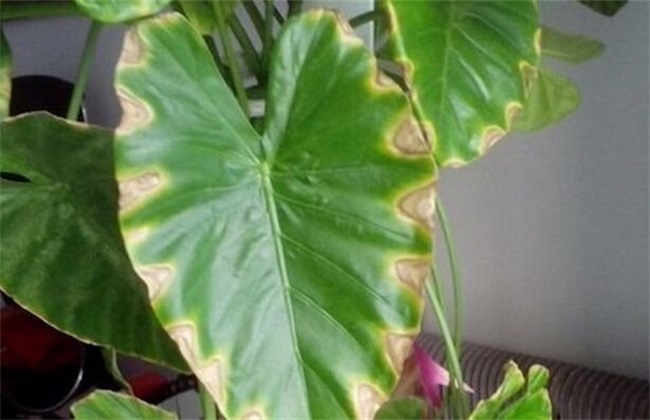
1. Unsuitable environment
An unsuitable environment is the main cause of yellowing leaves in Alocasia macrorrhizos. The most important factor is the soil. When growing Alocasia macrorrhizos, if the soil pH is unsuitable and too alkaline, or if it is grown in a flower pot without changing the soil for a long time, then the soil will lack nutrients, which affects the plant's growth. This leads to undesirable symptoms such as yellowing and drooping leaves in Alocasia macrorrhizos. Therefore, when planting, we should pay attention to adjusting the soil pH properly. For pot cultivation, the soil should be changed every year, with the amount of soil replaced kept at about 1/3, and then old roots and diseased roots should be pruned off, with appropriate topdressing to provide nutrients.
2. Improper watering
Alocasia macrorrhizos has a relatively large demand for water. If watered too much, water will accumulate in the flower pot, causing the roots of Alocasia macrorrhizos to rot, which affects its nutrient absorption and growth. But if watering is not thorough, then due to tightly packed roots or compacted soil, watering will be uneven, affecting the plant's water absorption. Therefore, we should pay attention to doing a good job of watering, keeping watering even. During the growing season, water more, but after entering winter, Alocasia macrorrhizos will gradually go dormant, so at this time pay attention to controlling the amount of watering.
3. Exposure to strong sunlight
When growing, Alocasia macrorrhizos likes to grow in shady places. Although it has a certain demand for light, it cannot withstand exposure to strong light. If it is placed directly under the sun to be exposed, then the leaves will be affected by sunscald and are very prone to yellowing and dying. Therefore, in the process of growing Alocasia macrorrhizos, we should pay attention to controlling the light. The light should not be too strong, and the daily light duration should not be too long; keeping it at about 3 hours is sufficient.
4. Insufficient light
Insufficient light is likewise a main cause of yellowing leaves in Alocasia macrorrhizos. When growing Alocasia macrorrhizos, if it is kept in a place with insufficient light for a long time, then due to the lack of light, the plant's photosynthesis will be affected, reducing the plant's nutrient accumulation. If it grows in such an environment for a long time, then the internodes of Alocasia macrorrhizos will be very long, and the leaves will be small and weak, and its ornamental value will also be affected as a result. Therefore, light should be provided appropriately for Alocasia macrorrhizos to promote its growth.
The above is a brief introduction to what causes the yellowing of Alocasia macrorrhizos leaves. That is all for today's introduction. This article is for reference only, and I hope it can be helpful to everyone.