What to Do When Sedum rubrotinctum Drops Its Leaves? Cause Analysis and First Aid Methods
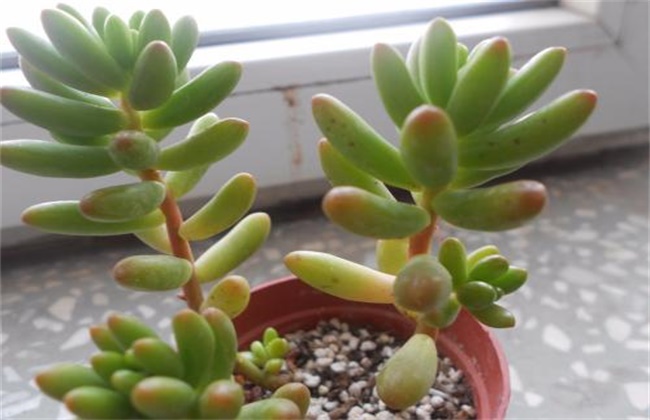
Sedum rubrotinctum is a common succulent plant. Its leaf color varies depending on the amount of light it receives. The longer it is exposed to light, the more its leaves turn red, while those grown in partial shade are mostly emerald green. But many people find that before their Sedum rubrotinctum even turns red, its leaves have already dropped. What is going on here? How should you rescue a Sedum rubrotinctum that is dropping leaves? Let's take a look at the detailed explanation below.
1. Insufficient light
Sedum rubrotinctum is a light-loving plant. Apart from summer, when the light is too intense and it needs appropriate shading, it can be placed directly in the sun in all other seasons to receive ample light. The more light it gets, the more beautiful its color becomes. However, if it is kept indoors for a long time, it will gradually grow poorly and its leaves will drop.
First aid method: If leaf drop occurs due to insufficient light, promptly move it to a spot with ample light for care, and after some time it will return to normal.
2. Overwatering
Sedum rubrotinctum is drought-tolerant but not waterlogging-tolerant. It does not have high demands for watering, and it can grow normally even without watering for ten days to half a month. So when cultivating it, there is no need to water too much, otherwise it is very easy to cause water accumulation and root rot, and the leaves will gradually drop.
First aid method: Control the frequency and amount of watering for Sedum rubrotinctum. It is best to place it outdoors for care so it receives ample light, while also controlling watering, and it will slowly return to normal. Watering should be adjusted according to seasonal changes. In summer, when temperatures are high and water evaporates quickly, you can water a little more; when temperatures are low, keep the potting soil dry.
3. Poor ventilation
Sedum rubrotinctum likes a warm and well-ventilated growing environment, especially in summer, when maintaining good ventilation is particularly important. If Sedum rubrotinctum grows in a place with no ventilation for a long time and with relatively high humidity, it is very easy for the succulent to develop stem rot. The common symptoms are root and stem rot and leaf drop.
First aid method: At this point, promptly move it to a cool, well-ventilated place, cut off the healthy top part of the plant, and plant it in another pot, otherwise the entire plant will very likely die.
The above is an introduction to the causes of leaf drop in Sedum rubrotinctum and first aid methods. We hope it can help you. If you want to learn more related knowledge, please stay tuned to us.