What to Do When Poinsettia Leaves Drop? Cause Analysis and Treatment Methods
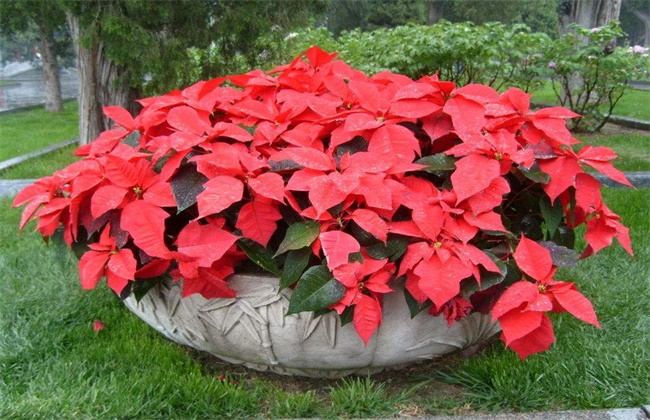
The poinsettia is both a flowering plant and a foliage plant. Its flowers bloom in vivid red, and its leaves start out green, turning red in autumn, giving a very festive impression, so some large celebrations use poinsettias to decorate the scene. But during care, I believe everyone has encountered poinsettias dropping their leaves, so what is going on with poinsettia leaf drop? Let's take a look.
1. Light too strong
The poinsettia is a short-day plant, and strong direct light should be strictly avoided. In summer, with high temperatures and strong light, once intense sunlight shines directly on poinsettia leaves, combined with poor ventilation, the poinsettia leaves easily drop due to high temperature and dryness.
Treatment method: In summer, place the poinsettia plant in a well-ventilated location to avoid exposure to the sun, provide appropriate shade, keep a distance of 50 cm between pots, and frequently spray water on the ground to increase air humidity and lower the temperature.
2. Low temperature
The poinsettia likes a warm, humid and cool climate, is not cold-tolerant, and its suitable growth temperature is between 15-20 degrees. In winter, the surrounding environment should be kept above 15 degrees, otherwise the poinsettia leaves will fall off. In winter, if it is hit by cold wind, it will also cause a large number of poinsettia leaves to drop.
Treatment method: When the temperature drops in winter, find a way to raise the temperature and place the plant in a relatively stable indoor environment for care. By mid-October, place it in a warm, sunny spot facing south to ensure it is not hit by cold wind and caused to drop leaves.
3. Improper watering
The poinsettia fears both dryness and waterlogging. If the potting soil is too wet, the poinsettia cannot carry out photosynthesis well, which will cause poor nutrition in the plant and leaf drop; but if the potting soil is too dry, it will cause physiological water shortage in the poinsettia, making the leaves curl and drop in large numbers.
Treatment method: If the leaf drop is caused by overwatering, place the poinsettia in a ventilated, shady spot, give it plenty of light during the day, let the moisture in the soil dry out, and then resume normal watering. When it rains, drain water promptly, or move it indoors. When the potting soil is dry, water it promptly too, but grasp the amount and frequency of watering well.
4. Improper fertilizing
The poinsettia likes fertilizer, and during the growth period it has a relatively large demand for nitrogen fertilizer. If the nitrogen fertilizer supply is insufficient, it will also cause the lower leaves to fall off, but attention should also be paid to controlling fertilization, because nitrogen fertilizer application will cause excessive growth.
Treatment method: In addition to the base fertilizer used when potting, within one month after pinching, apply a thin diluted fertilizer solution once every 7 days, not too much. Do not fertilize during the flowering period, otherwise it will cause the leaf bracts to scorch. Before bringing it indoors in winter, apply a small amount of compound fertilizer, which helps it overwinter.
The above is an introduction to the causes and treatment methods of poinsettia leaf drop. I hope it can help you. If you want to learn more related knowledge, please follow us.