How to Prune a Jade Plant: A Detailed Guide to Pruning Methods
The jade plant (Crassula ovata) is one of the succulents that many plant lovers enjoy growing. It grows quickly and can become lush with branches and leaves in a short time. Without pruning, its ventilation and light penetration will suffer, which is bad for its growth. So timely pruning not only lets the plant receive light evenly, but also shapes a beautiful tree form and boosts its ornamental value. So how should a jade plant be pruned? Let's find out together.
1. Pruning Time
There is no fixed pruning time for the jade plant. Generally, light pruning can be done from April to September, but heavy pruning must be done during the dormant period, so as not to disrupt its normal biological clock and cause slow new bud sprouting or poor growth. In early spring, before the jade plant enters its rapid growth period, you can prune it to stimulate the sprouting of new buds and heart leaves, helping it grow quickly. In late autumn, when the temperature drops below 15°C, the jade plant basically stops growing and gradually enters dormancy or semi-dormancy, so it can be pruned then. If you want to use branches for cuttings, it is recommended to prune in spring and autumn, not in the hot summer or cold winter, otherwise rooting is extremely difficult.
2. Pruning Methods
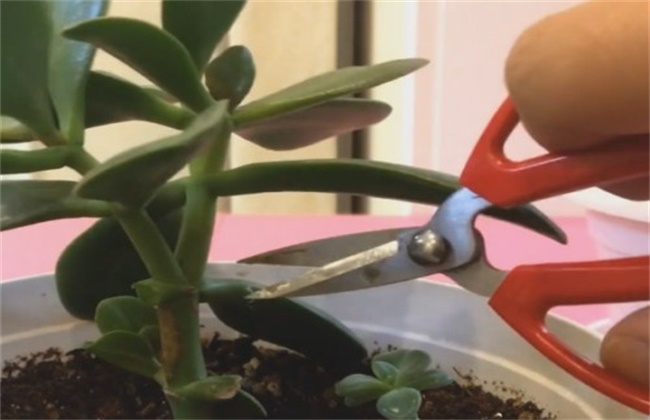
The jade plant usually blooms in spring and summer. Once the flowers fade, you can start pruning. Generally, you need to cut off the branches that have already bloomed, and according to the overall shape, keep at least 4 buds on each branch. After pruning, new branches will grow from these bud points. Winter is the dormant period for the jade plant, and you can also prune then. At this time, pruning mainly means shortening the branches, keeping them about 10-25 cm long according to the overall size of the plant; you can also adjust the length based on the plant's overall shape, so that the leaves that grow out will form a layered, well-arranged appearance. At the same time, while shortening the branches, you should also remove some dead branches and fallen leaves, which allows the plant to grow more healthily.
3. Pruning Precautions
When the summer temperature is above 35°C, it is not recommended to do any pruning, and when the winter temperature is below 5°C, it is best not to prune the jade plant at all. After pruning, the jade plant should be given more ventilation and more sunlight, and should not be rained on or have water sprayed on its leaves, so that the wounds heal as quickly as possible and avoid bacterial infection. When pruning, pay attention to weather changes and do it on a sunny day. If continuous rainy days follow the pruning, you can apply carbendazim to the wounds, otherwise the wounds will shrink and dry out due to bacterial infection, affecting the plant's appearance and growth. After pruning in spring and autumn, the plant should not be exposed to strong sun; it is best kept in a ventilated, rain-sheltered place, and during this time do not spray water on the leaves. Once the wounds have healed, move it outdoors for care.
The above is an introduction to jade plant pruning methods. We hope it helps you. For more related knowledge, please stay tuned to us.