How long does the water buffalo farming cycle generally take?
Farming water buffaloes is relatively slow, with a long raising period, but the price is considerable. So how long does it take to raise a water buffalo from birth until it is ready for market? Those who have raised them certainly know this, but some who have not raised them do not understand the specific situation, so today's article is mainly to introduce the process of raising water buffaloes.
1. Farming cycle
For traditional water buffaloes in general, raising them to market weight takes about three years, from birth until they grow to adulthood, when their body weight and other standards reach the market-ready criteria. Crossbred second-generation water buffaloes can cut roughly one year off the raising time, as they grow and develop much faster, needing two years to be ready for market. Compared with other cattle, water buffaloes grow very slowly and need to be raised for a long period before they reach sexual maturity and can reproduce.
2. Farming and feeding
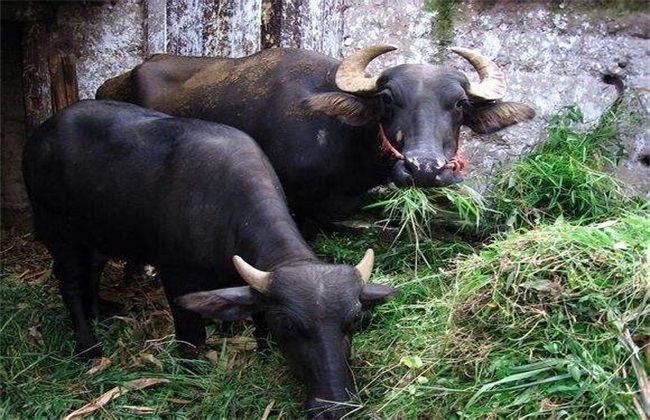
Generally, raising water buffaloes mainly involves feeding green grass forage, combined with concentrated feed. Usually fresh cut grass is fed every morning and evening. Or they are taken up the mountain to graze. In ordinary raising, feeding green grass alone is enough, but during pregnancy, concentrated feed needs to be supplemented to provide comprehensive nutrition. In winter, however, dried grass is mainly fed, such as chopped dried rice straw, sometimes mixed with some rice grains and rice bran. The grasses commonly fed are thatch grass, forage grass, and green corn leaves.
3. Key management points
With meticulous management, feeding must be done at fixed times and in fixed amounts, and the feed must be clean and hygienic, with no mold or inedible impurities. There are some grasses that water buffaloes cannot eat, so care must be taken to identify them. Provide clean drinking water, and do not let water buffaloes drink dirty water at will. Water buffaloes have thick skin and poor body temperature regulation, so attention must be paid to preventing heatstroke in summer and keeping warm in winter. Water buffaloes like to roll in muddy ponds, and if conditions allow, they can be allowed to roll in the mud.
4. Cleaning and disease prevention
The environment of the sheep shed should be kept clean. A filthy environment easily breeds mosquitoes and insects in summer, and bites from horseflies can easily transmit diseases. The hooves of the cattle are also prone to infection. Therefore, it is necessary to sweep and wash it clean. In summer, water buffaloes can be bathed more often and their bodies rinsed to keep them clean, which can also reduce illness. d Regularly inject vaccines for some common diseases to prevent illness.
Water buffaloes generally rarely get sick, are strong-bodied, highly adaptable, and easy to raise, but basic precautions should still be noted. Also, wild water buffaloes are an endangered species, and those generally raised are domestic water buffaloes.