How to grow gladiolus? Detailed guide to cultivation methods and precautions
The scientific name of gladiolus is Gladiolus, and it is not an orchid but a bulbous plant in the Iridaceae family. It is a flowering plant with many varieties, bright flower colors, a long flowering period, and high ornamental value. So how should gladiolus be grown? Below, let's take a look with the editor at the cultivation methods and precautions for gladiolus.
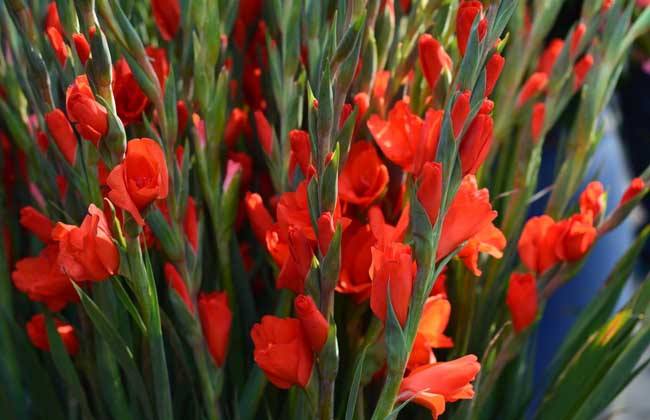
1. Soil selection
When growing gladiolus, it is best to choose deep, fertile, loose sandy soil that drains well, is airy, and does not easily become waterlogged. In addition, pay attention to the soil pH; it is best not to exceed [value], with slightly acidic soil being optimal.
2. Light and temperature requirements
Gladiolus prefers a warm and humid climate, dislikes high temperatures and intense summer heat, and is not cold-tolerant. The optimal growing temperature is 20-25 degrees. When the early spring soil temperature rises above 5 degrees, the corms can sprout, and in summer, growth is inhibited when temperatures exceed 35 degrees. Gladiolus generally blooms 3 months after planting, but the cultivation cycle is greatly affected by temperature; the higher the temperature during the growing period, the shorter the cultivation cycle. In terms of light, gladiolus adapts to sunny environments and is a typical long-day plant. Flower bud differentiation occurs only under light conditions of more than 14 hours per day. After flower bud differentiation, short-day conditions can also promote flower bud growth and early flowering.
3. Fertilizer and water management
Gladiolus is a fertilizer-loving flower, so pay attention to timely fertilization after planting. Generally, fertilization is needed 3-4 times per month. When fertilizing, be careful not to apply too much nitrogen fertilizer, and apply phosphorus and potassium fertilizer as appropriate to enhance flower bud differentiation and corm nutrition. After flowering, use superphosphate extract as a top dressing to promote full growth of the new corms. Gladiolus should be fertilized at least 3 times during the growing period: the first time after the 2nd leaf unfolds, the second time at the 4-leaf stage, and the third time after flowering. Increase phosphorus and potassium fertilizer to prevent lodging. Before gladiolus emerges, water less once every 10 days. After the seedlings are uniform, do not let them dry out, otherwise the leaf tips will turn yellow. Watering gladiolus requires controlling the amount; too much water easily causes root fertilizer [damage], while lack of water often causes wilting, and watering still cannot restore it, causing it to bend into a "zigzag" shape and affecting its appearance.
4. Precautions
Harvesting and storing gladiolus corms: After the inflorescence is harvested, the underground corms grow rapidly and can generally be harvested in about 45 days. At this time, the leaves begin to yellow and wither. When all the leaves have yellowed and withered, the small corms around the large corm will also all fall off, which is very unfavorable for harvesting, so harvest in time. The optimal temperature for gladiolus growth and development generally does not exceed 27 degrees, so in summer high temperatures, pay attention to ventilation and shading to avoid plant aging, senescence, and degeneration caused by excessively high temperatures.
The above is an introduction to gladiolus cultivation methods and precautions. We hope it can help you. To learn more related knowledge, please follow us.