What are the characteristics of rumination in cattle? A comprehensive interpretation of cattle rumination behavior
Cattle generally have four stomachs, so rumination occurs, but in modern farming, rumination can generally be observed to assess the health status of cattle. It is a good way to prevent some cattle diseases in advance, and generally experienced farmers can identify problems through observation. So how should this phenomenon be observed and judged? Let us look for the answer in the text below.
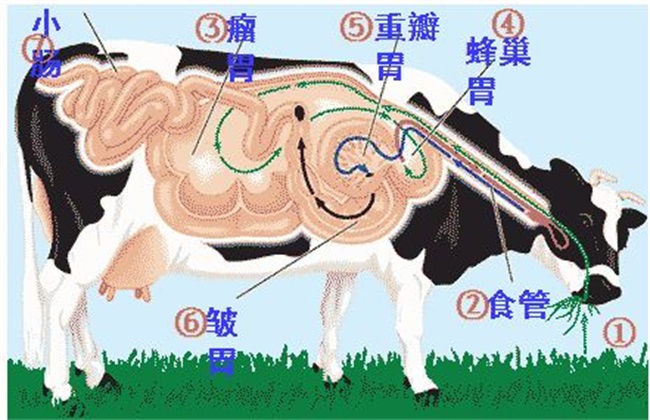
1. Structure of the cattle stomach
Cattle have four stomachs; only one is a true stomach, and the other three are the result of esophageal variation. Each stomach has a name: only the abomasum is the true stomach, while the rumen, reticulum, and omasum are the three variant stomachs. The one that secretes gastric juice is the true stomach. But all four stomachs can play an important role in digestion. The rumen has many microorganisms and digests most of the food; the reticulum filters out heavy objects that are swallowed, such as nails; the omasum has the function of squeezing and grinding food; the abomasum is the main site of digestion.
2. Characteristics of rumination
After eating, food is chewed coarsely and enters the rumen, and later, during rest, it can return to the mouth for further chewing. This is rumination. There are four stages: food returns from the stomach to the mouth, is chewed, mixed with saliva, and then swallowed again. This process is experienced each time. The state of rumination is related to the health of cattle, and health conditions can be observed through it.
3. Slowed function
Generally, one rumination session lasts more than 40 minutes, and cattle ruminate more than 5 times a night. However, if the number of rumination sessions decreases, the duration becomes shorter, and the number of times the bolus is chewed decreases, it may be a sign of weakness. It is very likely to be conditions such as rumen impaction, fore-stomach atony, or bloat, or disease phenomena such as poisoning diseases, metabolic diseases, or brain diseases. Therefore, it can be detected and treated as early as possible.
4. No more rumination
If there is completely no rumination, then the problem is relatively serious, and it is very likely that the fore-stomach cannot move and the stomach wall is paralyzed. If stoppage occurs multiple times, it may be reticulitis, chronic diseases, and the like, such as tuberculosis-related diseases. These diseases will consume the cattle's body over a long period and lead to ineffective rumination. The rumination status of cattle determines the state of their digestive function and also reflects their health status.
Cattle rumination is closely related to the health status of cattle, and the health of cattle can be understood from their rumination status. Some diseases can be prevented, or detected and treated in advance. In farming, attention should be paid to rumination status.