How to Propagate Hydrangeas? A Detailed Guide to Common Propagation Methods
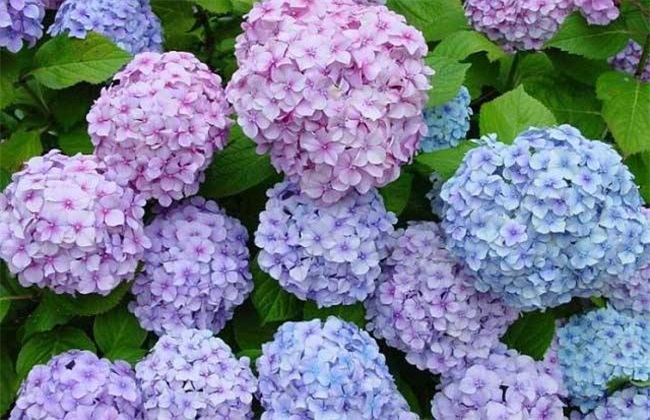
Hydrangea is a shrub plant in the Saxifragaceae family, and it has been cultivated in China for a fairly long time. Nowadays, most parks in China owe part of their beauty to hydrangeas, which also form a striking scenic feature. Its ornamental value is very high, and it currently has a large cultivation area in China. However, when cultivating hydrangeas, we need to do a good job with propagation, so today I have brought you the propagation methods for hydrangeas. Let's take a look below!
1. Division Propagation
The most commonly used propagation method for hydrangeas is division propagation. Division propagation is relatively simple to carry out, and the rooting survival rate is also fairly high. The division time for hydrangeas should be chosen in early spring when buds are sprouting. First, choose a robust mother plant free of pests and diseases, then select branches that have already rooted. Separate them from the mother plant, plant them directly into pots, then water appropriately and provide proper shade. However, watering should not be excessive, to avoid the branches rotting. Once the branches sprout new buds, normal care can begin.
2. Layering Propagation
Layering propagation is also a commonly used propagation method in hydrangea cultivation. Compared with division, layering is slightly more difficult to carry out, but its survival rate is also relatively high. Layering propagation can generally be carried out throughout the year, but it mainly depends on the sprouting of new buds on the branches. Layering should be done when new buds are sprouting. Choose a robust branch, then make a ring cut down to the xylem, wrap the ring cut with moist sand, and tie it tightly. After about a month it will grow, and in the spring of the following year it can be separated, transplanted with soil, and with careful management it can bloom that same year.
3. Cutting Propagation
Besides division and layering, hydrangeas can also be propagated by cuttings. The success rate of cutting propagation is actually relatively high, but it is not suitable for large-scale planting. Cutting propagation is generally carried out during the annual plum rain season. First, select high-quality branches. Cut off the tender tips, keeping the length at about 20 cm. Then cut off the leaves on the lower part of the cuttings, and a rooting agent can be applied appropriately. Then insert them directly into a sand bed, with the temperature controlled at about 15 degrees, and they will root in about half a month.
4. Tissue Culture Propagation
Tissue culture propagation is rather troublesome to carry out, but it is also a high-quality propagation method. First, we need to select dormant buds from the plant as explants. Then carry out routine disinfection and inoculation, then add an appropriate amount of benzylaminopurine and indoleacetic acid, and place them on the culture medium to promote the formation of adventitious buds. When the seedlings grow to about 3 cm tall, they can be transferred to a medium with indoleacetic acid to promote growth into complete small plantlets.
The above is a brief introduction to hydrangea propagation methods. There are many propagation methods for hydrangeas, and we should choose the appropriate propagation method according to the actual situation. That is all for today's introduction. This article is for reference only, and I hope it can help everyone!