When is the best time to take cuttings from a Kalanchoe?
Kalanchoe (Kalanchoe blossfeldiana) is an ornamental flowering plant commonly grown indoors, usually in pots. Because the plant is succulent in nature, it is very well suited to propagation by cuttings, which root easily and are convenient and time-saving. Nowadays it is generally propagated by cuttings, so the question is when cuttings root most easily and grow best. The following will explain this one by one.
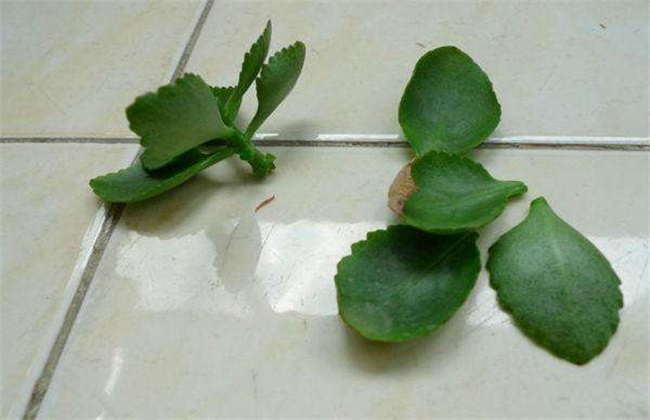
1. Cutting time
Cuttings can in principle be taken in all four seasons, only the survival rate varies. This is because they are more or less affected by the external environment. For example, in winter the low temperature, even indoors, is not as warm as in other seasons, so rooting will certainly be very slow. Moreover, cuttings can be taken as leaf cuttings or stem cuttings, and in fact leaf cuttings are suitable in spring, when the plant has strong growth vigor and roots easily. The most suitable seasons are spring and autumn. Summer is hot and prone to disease, and there is too much work in shading and moisture retention.
2. Leaf cuttings
Choose a large, healthy, disease-free branch, pick off the leaves and leave them in a cool place for several hours; when the wound is dry and free of sap, they can be used for cuttings, otherwise the wound in direct contact with the soil is prone to infection and rot. It is best to use river sand for cuttings, as it has good air permeability and moisture retention and is not easily infected. Insert the leaf stalk into the river sand, covering the leaf stalk completely is enough; the leaf blade does not need to be covered. Afterwards place it in a cool, airy spot, require that it is not exposed to direct sunlight, spray water every day, check on it, and after rooting spray fertilizer on the leaf surface.
3. Stem cuttings
Choose a section of branch near the top, preferably with a terminal bud, and cut a branch of about 5 to 8 cm. Insert it into river sand in the same way as leaf cuttings, only the lower leaves may need to be removed, leaving only the terminal bud; the insertion depth is about 3 cm, and the lower end is cut at a slant. Likewise the wound must be dried, and afterwards it must be sprayed with water and must not be exposed to strong light. Sometimes some monopotassium phosphate can be sprayed on to promote nutrition. After taking cuttings, pay attention to controlling water; since it is a succulent itself, it is prone to water shortage.
4. Points to note
After taking cuttings, pay attention to controlling water; since it is a succulent itself with a high water content, too much watering easily causes rot and prevents rooting. Finally, spray water, roughly once every one to two days, and water once when dry. Be careful to choose a container with good air permeability, otherwise water accumulates easily. Before roots grow, keep humidity a little higher and shade more strictly; once roots have grown, reduce watering and allow appropriate light.
The best time to take cuttings from a Kalanchoe is spring and autumn; in these two seasons the air humidity is suitable and the temperature is appropriate, which favors rooting. In the end, taking cuttings from a Kalanchoe is relatively easy to succeed with; the key is to pay attention to some management details.