How to Graft Chrysanthemums? Detailed Grafting Methods and Steps
People who don't usually grow flowers generally don't know that chrysanthemums can be grafted, and grafting chrysanthemums has many benefits. Besides being more attractive, it can also change the plant height of chrysanthemums, making shaping easier, and some rootstock plants are tough and not prone to lodging. Some also produce more flowers after grafting, increasing the flower count. So people have started grafting chrysanthemums. How exactly to graft chrysanthemums will be explained next.
1. Grafting Preparation
You can choose Artemisia annua as the rootstock, or you can choose other chrysanthemum varieties, plants of the same family and genus. The scion is the chrysanthemum variety you want to graft. Before grafting, both the rootstock and scion plants should be watered to ensure water content and promote growth. You also need to prepare a moistened clean plastic bag for bagging. Before grafting, spray water to maintain moisture, and once the water dries you can graft. Sterilize the grafting knife.
2. Grafting Operation
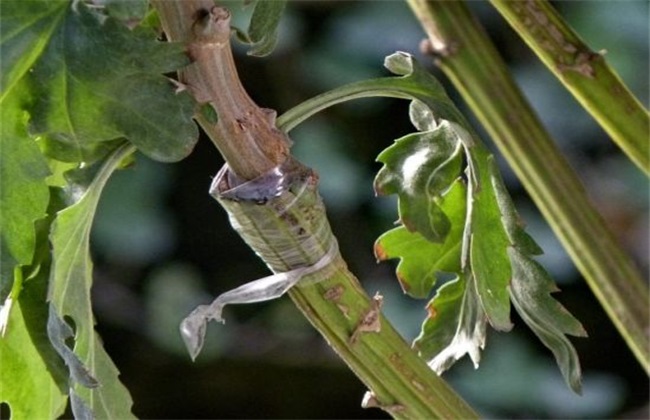
Use the cleft grafting method, selecting a scion 4 to 6 cm long from the top shoot, which must have 2 leaves, with the lower leaves all removed, then make a slanting cut from the lower end of the scion, and another cut on the back side, about 1.5 cm long, with both sides matching, then place the scion on your lips and hold it, without touching saliva. Avoid contact with air. Then cut off the top of the rootstock, split the middle of the cut surface, to a depth 2 cm longer than the scion, insert the scion, making sure all cut surfaces are not exposed. Then bind tightly with plastic strips, all wounds must not be exposed. Then put on a plastic bag and tie it tightly.
3. Later Management
Whether it survives after grafting is not guaranteed, even the most skilled master dare not guarantee 100% survival. So later management and care are quite important. For example, moisture retention and shading work after grafting; after grafting, promptly set up a shade net or other objects for shade. Some potted plants can be placed indoors near a window after grafting. Then water frequently to maintain moisture, it must not dry out, and after a week you can gradually remove the shade net. Spray water daily to maintain moisture. Also gradually give the plastic bag ventilation, and finally remove it completely.
4. Precautions
Pay attention to checking survival; after the scion dies you can re-graft, and if the scion is dark green and growing normally, you can remove the protective cover. Re-grafting cannot be done in the same position, as it is not easy to survive. The scion should be chosen from robust branches with a relatively low degree of hardening, which are easy to survive. The rootstock should also not be lignified, otherwise it will not survive. Move quickly, solve it with one cut, and ensure the cut surface is smooth.
Grafting chrysanthemums is actually not difficult; before the tender branches become woody they are very easy to survive, so you must choose the right timing. Survival after grafting also depends on later management. Grafting requires attention to some details. Grafting emphasizes flat, steady, and fast.