What are the soil requirements for growing roses
Growing roses also comes with certain requirements. In the overall environment, besides temperature, water and light, there are also certain requirements for the soil. Roses grow well, and grow best, in suitable soil. Certain soil characteristics must also match what roses need. That is how we can know what kind of soil is best to prepare when growing roses. Let us analyze this together now.
1. Soil nutrients
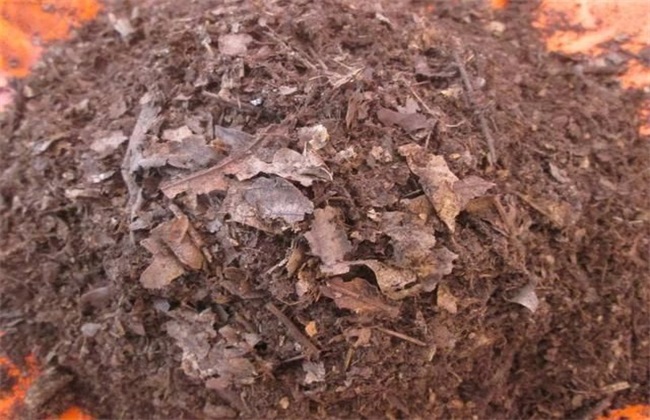
The requirement for nutrients in the soil is fertile soil, rich in humus, soil formed from accumulated fallen leaves, or soil that readily absorbs farmyard manure. Soil that is naturally black in appearance generally has fairly rich nutrients and a very high humus content. Fertile soil is formed after the remains of plants and soil organisms from many years decay. Such soil often has earthworm activity in it.
2. Soil terrain
The soil may be very good, but the terrain must be good too. It cannot be in a low-lying spot or a place with a high groundwater table; it should be somewhat higher up, in a place with a low water table. Ideally it is a sunny hillside, since this makes drainage easy and gives plenty of sunlight for good growth. But pay attention to whether there is a water source nearby. Drier conditions are also somewhat better, since there is no need to worry about waterlogging, but the hillside should not be too high; if it is too high, watering is inconvenient.
3. Soil texture
Generally, heavy clay or compacted soil is not acceptable, and neither is clay soil: soil that congeals when it rains and then dries out and hardens once the weather clears is no good. Such soil is not breathable, or after watering the water cannot seep in well, the roots cannot fully take up water, and water easily collects in the upper layer, damaging the roots. Some sandy soils are also no good: water drains away very quickly and they dry out once the weather clears. They hold neither water nor fertilizer. Sandy loam is best; with this kind of soil, water can gradually seep in and fertilizer will not be lost. It will not become compacted, nor will it be excessively dry.
4. Soil properties
The acidity or alkalinity of the soil directly determines whether roses can be grown in it. For example, roses are most suited to being grown in neutral to alkaline soil or slightly acidic soil. That means they cannot be grown in saline-alkali land or saline land. They grow poorly in purely alkaline soil. They cannot be grown in purely acidic soil either. Growth will also be affected. Neutral soil is very suitable for rose growth.
Roses have the above requirements for the soil they grow in, and these are specifically determined by the growth characteristics of roses. Specifically, after planting you can observe which soil conditions they adapt to; generally this is how it is. But actual situations should be analyzed on a case-by-case basis.