How to Choose Suitable Chicken Breeds for Ecological Chicken Farming
Ecological chicken farming usually uses grassland pastures, natural woodlands, farm fields, and orchards as breeding grounds, without the need to build additional farms. The chickens are fed mainly with natural feed supplemented by artificial feed, such as insects, tender grass, leaves, seeds and so on, which can save a lot of breeding costs. Moreover, ecologically raised chickens have firm meat and a delicious taste, are deeply loved by people, and enjoy a good market. In recent years, the rural population has been continuously moving to cities, especially in remote mountainous areas, leaving behind large tracts of land or woodland, which provides favorable conditions for ecological farming. To further improve breeding returns, choosing good chicken breeds is crucial.
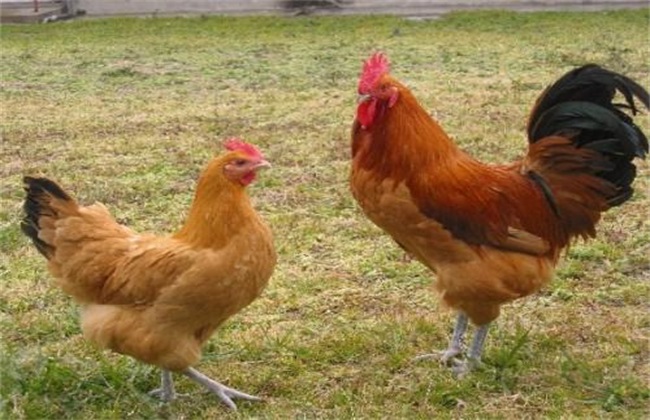
I. Selection Principles
Choosing good breeds to raise can effectively improve breeding returns. For ecological chicken farming, breeds with strong adaptability should be chosen first. Under free-range conditions, the outdoor environment is changeable, with temperature, humidity, light, wind and rain constantly fluctuating, so choosing chickens with strong adaptability can effectively reduce the mortality rate. Second, try to choose dual-purpose meat-and-egg breeds, or breeds with other benefits, so as to effectively increase returns.
Grasslands, fruit forests, farmland, bamboo forests and other environments differ from one another, so the breeds and methods of farming will also differ. China has many local chicken breeds, and local chickens generally have good adaptability to the local environment. Breeders are advised to choose relatively excellent local chicken breeds from their own area for farming.
II. Recommended Breeds
1. Big Bone Chicken
This chicken has a large and sturdy body, a deep and broad breast, and a plump abdomen. It is a dual-purpose egg-and-meat breed and has a very strong foraging ability. An adult rooster weighs about 2900 grams, and a hen about 2300 grams. Its outstanding advantage is a high annual egg production, and the eggs are relatively large, with an average weight of 63 grams; some eggs weigh more than 70 grams. The annual average egg production is 160 eggs, and with better feeding, the annual output can reach more than 180 eggs.
2. Silkie
The Silkie is known as the “White Phoenix” and is one of China's ancient chicken breeds, combining medicinal, meat, and ornamental value. Its annual egg production is 80—100 eggs, and can reach as high as 130—150 eggs, giving it high economic value. Silkie chickens can be raised free-range in bamboo forests and fruit forests, bringing extra income to growers.
3. Gushi Chicken
This is an excellent chicken breed developed through long-term selective breeding. Its advantages are tolerance of coarse feed and strong disease resistance, making it especially suitable for outdoor free-range and scattered raising. In addition, Gushi chicken meat is tender and rich in nutrients, with strong tonic effects. The hens lay relatively many eggs, the eggs are large, the egg white is fairly thick, and the yolk color is deep. The eggshells of Gushi chickens are relatively thick, which also makes them convenient to store and transport. It is a breed worth raising.
4. Partridge Chicken
The Partridge Chicken has a strong foraging ability and a very broad food chain, eating wild grass, fresh flowers, leaves and grass roots, grass seeds and tree fruits, moths and insects, fly maggots, earthworms, and insects. This chicken has a high activity level, so it has strong disease resistance, and it also has strong climbing ability and short-distance flying ability, making it suitable for mountain farming. Partridge chickens have the habit of returning to the coop; no matter how far they roam for food during the day, they will automatically return in the evening, so there is no need to worry about them getting lost.
III. Points to Note
Ecological farms should avoid densely populated places. Although poultry manure can be absorbed by fruit trees as fertilizer, it can still affect the comfort of others' living environment. Ecological farming is mainly based on natural feed, but feed still needs to be scientifically supplemented. The supplemented feed must be natural organic feed, such as corn, paddy rice, or their processed products, and must absolutely not contain hormones or similar substances, otherwise the quality of the ecological chickens will be affected. Since chickens often range outdoors, breeders need to take good safety precautions to prevent harm to the chickens from animals such as weasels, wildcats, foxes, and snakes.
The above are the main recommended chicken breeds for ecological chicken farming. We hope this article can be helpful to everyone. Adapting measures to local conditions is fundamental. In ecological chicken farming, do not blindly follow trends. One should consult more, consider more, and scientifically and rationally choose the location and breeding breeds in order to effectively improve returns.