What are the key technical points for raising sheep in confinement? Explained clearly in one article
As a very common livestock animal in China, sheep are very popular in China. Sheep are now raised on a very large scale in China, with different farming models. Confinement housing is one of the more common ones. Compared with free-range rearing, confined sheep grow faster, reach market weight earlier, and have very good body condition. So how should confined sheep raising be done? Below, the editor brings you the key technical points for raising sheep in confinement. Let's take a look!
1. Breed selection
Breed selection for confined sheep raising is very important. Common sheep breeds suitable for confinement raising include the Small-tailed Han sheep, etc. Breed selection directly affects the sheep's growth ability and body condition. Moreover, when raising in confinement, we must reasonably adjust the breeding method according to the farming purpose. For example, if the purpose is to sell breeding sheep, then purebred breeding should be carried out. If the purpose is commercial sheep, then crossbreeding should be carried out to improve breed quality, and farming benefits can thereby be expanded.
2. Building the pen
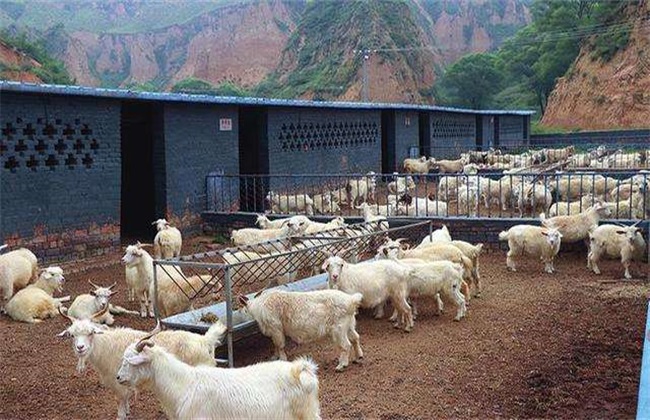
For confined sheep, the construction of the pen is naturally also essential. The sheep shed must have basic characteristics such as ventilation, dryness, and sanitation. It can be in the form of a single-slope shed or a fully enclosed form. Generally, the fully enclosed type is the main form. The wall height of the sheep shed should be maintained at about 2.4 m, and the ground height should be about 25 cm higher than outside the shed. Then the ground should mainly be in a sloped form to improve drainage capacity. A exercise yard should be built outside the shed, with an area about 3 times larger than the sheep shed area. This ensures the sheep have sufficient space for free activity and enhances the sheep's growth ability.
3. Forage preparation
Forage is the most critical component for saving costs in confined sheep raising. When raising in confinement, each farmer should make scientific combinations according to local actual conditions. Ensure balanced nutrition in all four seasons and provide it in stages. Then a relevant and suitable forage storage plan should be formulated. Feed can be obtained through various means such as collecting crop straw and seedlings, and planting silage feed. Distiller's grains, tofu residue, and planting forage such as alfalfa can also be used to prepare feed. Sufficient forage is the key material for ensuring the healthy growth of sheep, so everyone must pay close attention to this.
4. Feeding management
When building the sheep shed, we should prepare various basic feeding utensils such as feed troughs and water troughs inside the shed. This prevents sheep from wasting feed and contaminating drinking water, and improves feed utilization rate. Then separate feeding work should be done well, reasonably adjusted according to the sheep's size, sex, etc. When feeding, sheep should be allowed to eat freely, with sufficient feed placed in the feed trough, following the principle of more feed in smaller amounts, feeding about 3 times a day. Water should be kept in the water trough, and the water should be changed once a day. In addition, salt should be supplemented appropriately, and concentrated feed should be supplemented appropriately according to the sheep's growth stage.
The above is a brief introduction to the key technical points for raising sheep in confinement. Confined sheep raising requires careful management, especially in aspects such as feeding and drinking water. A reasonable management method is closely related to its farming benefits. That's all for today's introduction. This article is for reference only, and we hope it can help everyone!