A Detailed Explanation of the Effects and Methods of Use of Humic Acid Fertilizer
Humic acid fertilizer is a commonly used fertilizer in agricultural production; in fact, it refers to products made from peat, lignite and weathered coal through different production methods, containing large amounts of humic acid along with the nitrogen, phosphorus, potassium and certain trace elements needed for crop growth and development. So what effects does humic acid fertilizer have? How should it be used? Let's find out together.
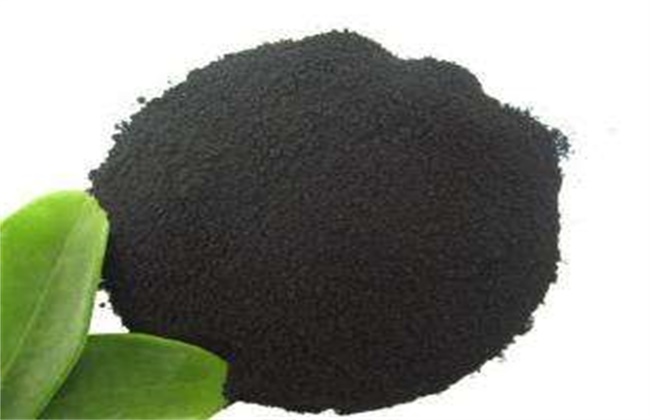
I. Effects of humic acid fertilizer.
1. Improving nitrogen fertilizer use efficiency
Nitrogen fertilizer is indispensable for plant growth and development, but after nitrogen fertilizer is applied, not all of it is absorbed by plants; a large portion is wasted. Taking urea and ammonium bicarbonate as examples, after they are applied to the field they are quickly lost with air and water, and only about 30% of the nitrogen is actually absorbed by crops. The aromatic nuclei, hydroxyl groups, carboxyl groups and other acidic substances in humic acid can react chemically with nitrogen, forming new stable ion clusters that remain in the soil for a longer time and gradually decompose to release nitrogen, allowing plants to absorb it steadily.
2. Enhancing phosphorus fertilizer
After phosphorus fertilizer is applied, it is fixed by metal ions in the soil, turning it into slow-release phosphorus or unavailable phosphorus. The aromatic nuclei, hydroxyl groups, carboxyl groups and other acidic functional groups in humic acid can react with phosphorus, making it soluble phosphorus, increasing the activity of phosphorus so it is easily absorbed by plants, and raising the fertilizer efficiency of phosphorus fertilizer by 5%-10%.
3. Enhancing potassium fertilizer
The functional groups in humic acid can also absorb and store potassium ions, which both prevents potassium ions from being lost with water in sandy soil and prevents potassium fixation in clay soil, raising potassium fertilizer use efficiency by about 5%.
4. Water retention and fertilizer retention
Humic acid interacts with calcium ions in the soil to form a flocculent precipitated gel, which can bind the soil together, turning soil particles into small reservoirs and fertilizer stores that hold water and nutrients, increasing soil porosity and thereby improving the soil's ability to retain water and fertilizer.
II. Methods of use of humic acid fertilizer
1. Seed soaking
Soaking seeds with humic acid fertilizer can increase the seed germination rate, bring about earlier emergence, and strengthen the seedling's ability to develop roots; the usual concentration is 0.0005%-0.05%, and the soaking time is generally 5-10 hours, or 24 hours for hard-shelled seeds.
2. Base fertilizer
Solid humic acid fertilizer can be used as a base fertilizer, generally at 100-150 kg per mu; when humic acid solution is applied as a base fertilizer, the concentration is 0.05-0.1%, with 250-400 liters of aqueous solution per mu, and it can be applied mixed with farmyard manure, either in furrows or in holes.
3. Top dressing
During the seedling stage and before the heading stage of crops, use about 250 liters per mu of an aqueous solution at 0.01-0.1% concentration, pouring it around the crop roots. In paddy fields it can be applied along with irrigation water or splashed on the water surface, and it can promote seedling emergence, strengthen seedlings and boost growth and development.
The above is an introduction to the effects and methods of use of humic acid fertilizer. We hope it helps you. To learn more related knowledge, please stay tuned to us.