How to grow Orange Jessamine? Detailed guide to cultivation methods and precautions
Orange Jessamine, also known as "Thousand-Mile Fragrance", blooms with pure white flowers that give off a strong, fragrant scent that can be smelled from far away, which is how it got its name. Because its flowers are beautiful, it has excellent ornamental value. However, many problems can be encountered during cultivation, so how should Orange Jessamine be grown? What should be paid attention to? Let's find out together.
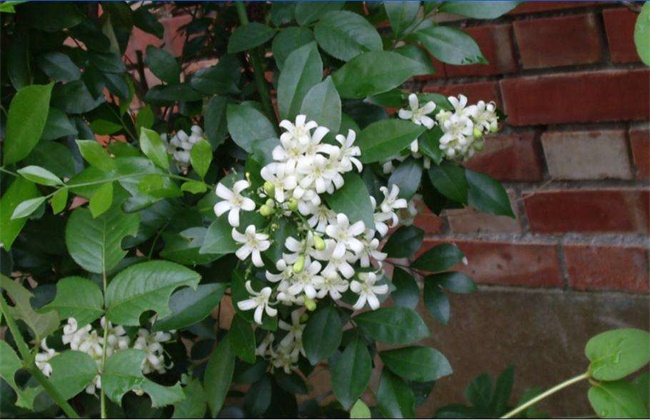
1. Watering
Orange Jessamine prefers a humid environment, but because the pot soil is limited, it dries out very easily. If it is not watered for a long time, it will die of dehydration from lack of water, but watering should also not be excessive, otherwise it will cause leggy growth. If the pot soil is too wet for a long time, the root system will have poor respiration, which can very easily cause root rot and death. When planting, water moderately. Before flower bud formation, control water moderately to promote flower bud differentiation; after flower bud formation, slightly moist but not waterlogged is best. During the high-temperature period in summer and autumn, water once in the morning and once in the evening; in spring, water once every other day; in winter, water once every several days; during the rainy season, guard against water accumulation to avoid root rot and death.
2. Fertilizing
When potting Orange Jessamine, it is recommended to mix bone meal and nitrogen-phosphorus-potassium compound fertilizer into the soil. During the growing period, apply a nitrogen-phosphorus-potassium compound fertilizer once every half month. Do not apply nitrogen fertilizer alone, so as to avoid leggy growth of branches and leaves without flower bud formation. During the peak growing season, apply a dilute cake fertilizer once every 3-5 weeks. From April to June, a low-concentration potassium dihydrogen phosphate solution can be sprayed on the leaves once a month. Generally, fertilizing is not suitable in autumn, so as to avoid new shoots sprouting and suffering frost damage. In winter, an organic fertilizer can be applied once as a base fertilizer. Nitrogen-phosphorus-potassium fertilizer is determined according to the growth condition of Orange Jessamine and different growth stages.
3. Pruning
When the seedlings grow to 10-15 cm tall, promptly remove the terminal buds, keeping a height of 6-8 cm. When the newly sprouted branches grow about 1 cm, carry out a second pinching. After several times of this, a full crown can be formed. After the crown is formed, the plant is still constantly growing, so it should also be pruned promptly: long branches shortened, dense branches thinned, to maintain a graceful tree shape. In particular, Orange Jessamine has strong sprouting ability, so in order to maintain a certain tree shape, attention should be paid to frequent pruning.
4. Precautions
The suitable growing temperature for Orange Jessamine is 20-32 degrees. It is not cold-tolerant. In winter, it should not be lower than 5 degrees, otherwise it will cause low-temperature frost damage, resulting in leaf drop and affecting the next year's growth. Once it is below 0 degrees, it will directly freeze to death. Orange Jessamine is a sun-loving plant. Placing it in a place with sufficient light and air circulation will allow it to bloom abundantly and grow lush foliage. If it is in semi-shade, it will grow poorly and the floral fragrance will be weaker. Its cultivation soil is best as fertile sandy soil. The disease that affects Orange Jessamine is powdery mildew, which often causes the leaves to be covered with white powdery material, leading to leaf chlorosis, yellowing and drop. Attention should be paid to prevention and control.
The above is an introduction to the cultivation methods and precautions for Orange Jessamine. We hope it can help you. If you want to learn more related knowledge, please stay tuned to us.