Detailed Guide to Camellia Care: Master the Key Points to Grow Camellias Well
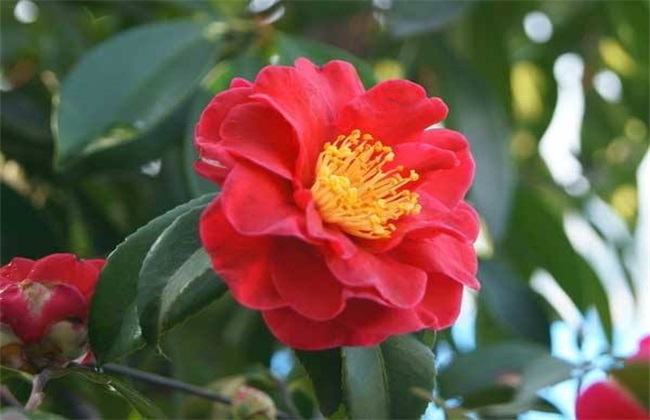
Camellia, also called mountain camellia, commonly grows wild with white flowers, but those cultivated and used in landscaping include ones with red flowers, various other flower colors, and double-petaled varieties. So they are very widely used in landscaping. Cultivated camellias include both low-growing shrubs and small trees. Therefore, the care work after planting differs, and the specific care situations are introduced in detail below.
1. Saplings
Generally, small trees are planted either by direct planting or by transplanting mature trees. Saplings grown directly from seed after sowing are actually quite easy to root, because young saplings have a relatively strong root growth capacity. After planting, a shade net should be set up, then water once every two days to keep them moist and help rooting. One month after planting for rooting, they can be fertilized once to restore growth vigor. After that, if no leaf yellowing occurs, no fertilization is needed.
2. Mature Trees
For transplanting mature trees, special attention must be paid to trees that have already grown into shape or even flowered: shading is a must, watering cannot be skimped on, and if conditions allow, water IV bottles can be hung directly on them. The soil should be loose, not sticky and heavy. Also set up supports to keep them growing upright. In winter, tie straw rings around the trunk for cold protection. In some areas, autumn has already turned cold, so special attention is needed, and whitewashing can also be done. Generally, do not transplant when they are flowering; if transplanting during flowering, all the flowers can be removed. The recovery time is very long, so long-term care is required.
3. Potted Cultivation
Generally, low-growing plants can be grown in pots. Pots come in large and small sizes. In potted cultivation, the growing space is limited, and the roots may curl up and absorb nutrients poorly. Therefore, watering and fertilizing are the key to potted care. Water little but often, do not let water accumulate, do not water during high temperatures, do not use plastic pots, and best use large clay pots. When they grow to a certain extent, repot them to gain growing space, replace the soil, and use a prepared humus sandy loam. For fertilizing, mainly use cooked and fermented materials such as peanut shells.
4. Growing Requirements
Camellias like to grow in acidic soil, like sunlight, like high terrain, moist soil environments, and require a cool climate. The soil should be fertile, loose sandy loam. Wild camellias are commonly found growing in places with plenty of humus. They need a temperature of 20 to 30 degrees; high temperatures can cause leaves to turn yellow and wither. For artificial cultivation, use a mix of peat, sawdust, and leaf mold.
Camellia care is mainly determined by the different tree forms and cultivation methods. Generally, the goal is to achieve the most suitable growing environment for camellias. Only then can good camellia growth be ensured. Generally, camellias require sandy loam, humus nutrients, and a cool environment.