What to Do When a Deer Antler Begonia (Mimicry Plant) Becomes Leggy? Causes and Solutions
The Deer Antler Begonia (Mimicry Plant) is a highly ornamental succulent native to South Africa. Its leaves grow in opposite pairs and are a powdery green color. In winter, it produces small white or pink flowers, making it very beautiful. However, many people cause it to become leggy through improper care. So what should you do when a Deer Antler Begonia becomes leggy? Let's find out together.
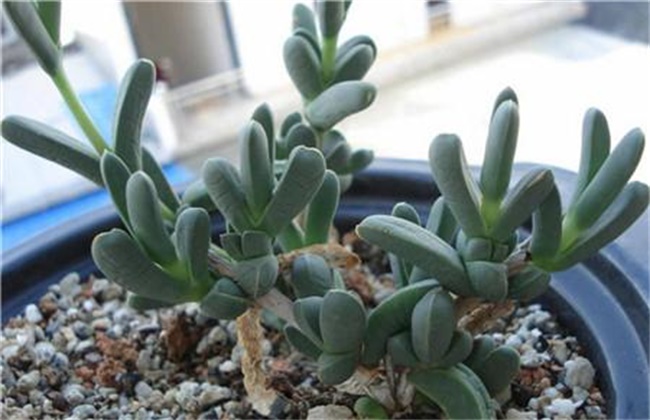
I. Causes of Legginess in the Deer Antler Begonia
1. Overwatering
Most succulents are relatively drought-tolerant and afraid of waterlogging. Many beginners do not understand this when growing them, and as soon as they see the soil dry out, they water immediately after it dries just a little. But this is extremely bad for the Deer Antler Begonia. When overwatered, the roots absorb water and quickly transport it to the leaves, causing the leaves to keep elongating, which results in legginess.
2. Insufficient Light
The Deer Antler Begonia likes an environment with plenty of light. During growth, it must be kept in an environment with sufficient light. It can be placed on a balcony or windowsill, and with sufficient fertilizer and water, it will grow very quickly. But if it is placed in a dark environment for a long time, due to the lack of light, it will keep elongating and become leggy.
II. Solutions
1. Water Reasonably
Overwatering can cause the Deer Antler Begonia to become leggy, so when watering, we must be scientific and reasonable, following the principle of not watering until the soil is dry, and watering thoroughly when we do. Once the Deer Antler Begonia shows symptoms of legginess, stop watering immediately, and the legginess will be alleviated. If during the rainy season the potting soil becomes filled with water, drain it promptly to reduce waterlogging. In summer's high temperatures, in addition to watering, you can also mist to increase air humidity.
2. Beheading
After the Deer Antler Begonia becomes leggy, its originally attractive plant shape becomes very ugly. But it has extremely strong reproductive capacity, so after legginess occurs, you can behead it and re-root the cuttings. Cut off the top portion, wait for the wound to dry, then re-plant it as a cutting, and before long you will have another pot.
3. Reasonable Lighting
During normal care, pay attention to giving it sufficient light, especially in spring, autumn, and winter, which are key periods for its growth. Insufficient light will seriously affect its growth. If light is limited, you can appropriately control fertilizer and water to inhibit its legginess.
The above is an introduction to the causes of and solutions for legginess in the Deer Antler Begonia. We hope it helps you. If you want to learn more related knowledge, please stay tuned to us.