A Detailed Guide to the Correct Fertilization Principles and Application Methods of Water-Soluble Fertilizers
As a new type of fertilizer, water-soluble fertilizer not only comes in diverse formulas but also offers very flexible application methods compared with traditional fertilizers. It has developed rapidly in China in recent years. It suits the characteristic of plant roots absorbing nutrients continuously and can reduce the leaching losses caused by a single large application of fertilizer. So, do you know the fertilization principles and methods for water-soluble fertilizers? Let's take a look together.
1. Fertilization Principles
The most important fertilization principle for water-soluble fertilizer is small amounts applied frequently. This is because plant roots have the characteristic of absorbing nutrients continuously, so a single large application of fertilizer should be reduced, as it can damage plants and waste materials. Water-soluble fertilizer is generally applied by drenching, watering, or through irrigation equipment. Especially under drip irrigation conditions, roots grow over a relatively large area, and at this time the dependence on soil nutrient supply decreases, with more reliance on the nutrients provided by drip irrigation. This places higher demands on a reasonable nutrient ratio and concentration; if the formula is unbalanced, it will affect crop growth.
2. Reasonable Irrigation
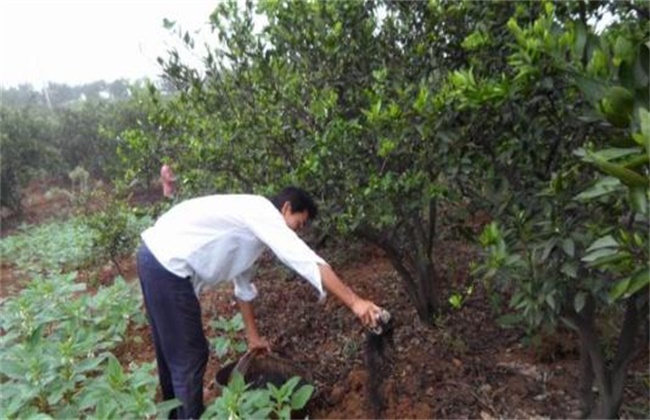
As for the amount of drip irrigation, generally it is enough to keep the root zone depth moist. The root zone depth varies greatly depending on the crop, and a shovel can be used to dig into the soil at any time to check the specific depth of the root zone. Excessive irrigation not only wastes water resources but, more seriously, leaches nutrients below the root zone, wasting fertilizer and reducing crop yield. Urea and nitrate nitrogen fertilizers in particular are very easily lost with water. When applying it together with other fertilizers, water-soluble fertilizer is generally used only as a top dressing; do not use it to replace fertilizer. Combine them reasonably to lower fertilizer costs and give full play to the advantages of each fertilizer.
3. Fertilization Precautions
First, when fertilizing through drip irrigation, run clean water first, and begin fertilizing after the pipes are full of water. Immediately after fertilizing, run clean water for 20-30 minutes to flush out all the residual fertilizer liquid in the pipes. Second, long-term use of drip irrigation for top dressing in greenhouses or at certain temperatures will cause nutrients to accumulate on the soil surface, affecting root growth; drip irrigation under plastic film can be used to inhibit the migration of salts toward the surface layer. In addition, pay attention to the uniformity of fertilization. In principle, the slower the fertilization under drip irrigation, the better, especially for elements with poor mobility in the soil. Extending the fertilization time can greatly improve the utilization rate of difficult-to-move nutrients.
The above is an introduction to the principles and methods of water-soluble fertilizer application. We hope it helps you. To learn more related knowledge, please stay tuned to us.