What are the cultivation methods and precautions for Phalaenopsis orchids?
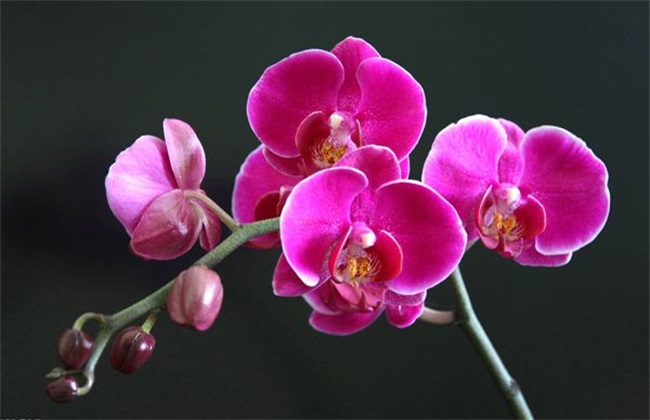
Phalaenopsis is a common flowering plant in the orchid family, distributed throughout various regions of China, and it is an epiphytic flower. The flowers of Phalaenopsis resemble butterflies, which is why it is named Phalaenopsis (moth orchid). The ornamental value of Phalaenopsis is very high, and Phalaenopsis can also grow by absorbing nutrients from the air. So how should Phalaenopsis be cultivated? And what precautions are there? Below, the editor will give everyone a brief introduction. Let's take a look together!
1. Substrate preparation
Phalaenopsis is an epiphytic flower, generally attaching to rocks in the form of aerial roots to grow, and can absorb water and nutrients through the air. Therefore, the planting substrate for Phalaenopsis should mainly consist of soft, breathable materials, such as sphagnum moss, tree bark, etc. You can also directly fix Phalaenopsis seedlings onto charcoal and let them grow freely, but be careful to control the pH value at around 6.5. If you want to use containers for large-scale cultivation, then it is best not to choose common plastic pots. Bamboo-woven vessels and the like should be used instead. After the seedlings are planted, they should be promptly placed on shelves to promote the growth of aerial roots.
2. Cultivation management
After purchasing the seedlings, place them on a flower rack for about 7 days so the seedlings can adapt to the surrounding environment as quickly as possible. Then soak the seedlings in a carbendazim solution for about 3 minutes. After soaking, rinse the seedlings clean with water, wash off the culture medium attached to the seedlings, and rinse once more, otherwise the seedlings are prone to mildew. After the seedlings are sterilized, they can be planted with sphagnum moss. First soak the sphagnum moss for 4 hours to let it spread out, then sterilize it. Then wrap the sphagnum moss around the roots of the seedlings and place them in a pot, place the pot in a semi-shaded area, and control the relative humidity at around 75%. Do not water within 3 days after planting, then do a good job of ventilation and watering.
3. Water and fertilizer management
During the vigorous growth period of Phalaenopsis, be careful to appropriately increase the amount of water and fertilizer, and control the concentration of fertilizer and water, following the principle of small amounts applied frequently. If the temperature exceeds 15-32 degrees, then fertilization should be stopped. When topdressing, root topdressing and foliar topdressing should be used alternately. After entering July, apply an appropriate amount of compound fertilizer each month for root irrigation. After August, apply liquid fertilizer once every half month. Finally, in October, be careful to control the amount of fertilizer and water to promote the formation of flower buds, mainly by foliar topdressing with phosphorus and potassium fertilizer.
4. Precautions
Phalaenopsis has relatively high temperature requirements. When planting, the temperature must not exceed 30 degrees. Control it reasonably according to the size of the Phalaenopsis: at night, control small seedlings at 23 degrees and large seedlings at around 20 degrees. When promoting flowering, the temperature should be appropriately lowered, to 22 degrees during the day and around 18 degrees at night. After the first flower opens, it should be appropriately raised, with the daytime temperature adjusted to 26 degrees, and the day-night temperature difference maintained at around 5 degrees. Then, during the vegetative growth stage of Phalaenopsis, be careful to control humidity above 90%, lower it to around 75% during the flowering promotion period, and after flowering it only needs to be no less than 50%.
The above is a brief introduction to the cultivation methods and precautions for Phalaenopsis. The cultivation methods for Phalaenopsis are relatively simple, but you should also pay more attention, strengthen management, and improve the ornamental value of Phalaenopsis. That's all for today's introduction. This article is for reference only. Thank you all for reading and supporting.