Key Points and Methods of Sturgeon Farming Technology Explained in Detail
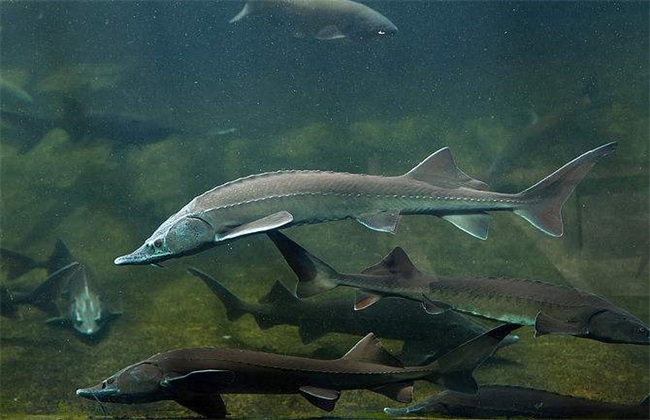
Sturgeon is a fish with a long history on Earth, a rather distinctive appearance, and one of the oldest fish species. There are eight species of wild sturgeon living in China, and the commonly heard ones include the Chinese sturgeon and the Siberian sturgeon. However, the Chinese sturgeon is a nationally protected animal and may not be caught. Some sturgeon currently eaten are farmed artificially, mostly introduced from foreign countries such as Russian sturgeon and European sturgeon. Farming sturgeon, and how to farm it, will differ from the farming methods for other fish.
1. Building the Farming Site
For sturgeon farming, since the fish grows quite large, it is best to farm them in ponds. If there is no pond, cement tanks should be built for farming. Generally, one tank is about 4 m long, 3 m wide, and more than 2 m deep. The number of sturgeon in a tank can be determined by the size of the sturgeon. There should be a clean water source nearby, and for farming, it is best to use live water and flowing water. The place for raising fry should be built separately; generally a shed can be made, using large plastic containers to raise the fry. Small fry look much like other fish. Some separate equipment should be prepared.
2. Farming Preparation
Before stocking, the cement tank should be cleaned, sprinkled with lime solution, soaked for about a week, then scrubbed clean, and then soaked in fresh water for several days. Before farming, drain it and refill with water to a depth of about 1.5 m. The seedlings are stocked into the tank only after they have been raised to a certain size. Before stocking, feed should be prepared, and an aerator should also be prepared, as deep water needs supplemental oxygen. The water inlet and outlet should be covered with mesh gauze to filter the water source.
3. Stocking Fry
Before stocking, the fry must be disinfected. For example, at first soak them in salt water or lime water for a few minutes, and after thorough sterilization, rinse them clean and stock them. Stock healthy fry, and the water depth for stocking fry is about 30 cm. Note that warm water should be used for farming. Fish soaked in salt water adapt easily to the pond water temperature. The stocked fry should be uniform in size and grow evenly. Before putting them into the pond, release a few first to see whether the water temperature is suitable, and if suitable, release them all.
4. Feeding
Sturgeon is a carnivorous fish, mainly eating bottom-dwelling organisms, fish and shrimp, and the like. If farmed in cement tanks, there are generally no aquatic animals. They must be supplied by the farmer, unlike in ponds. Small fish and shrimp, insect larvae, farmed feed insects, maggots, earthworms, and the like can be fed. Artificially formulated feed can also be fed. Healthy feed such as bone meal and fish meal. The food fed should be clean and disinfected.
5. Management Tasks
Feed on schedule every day, disinfect the food, and remove leftover food residue. When the water quality is unclean, change the water promptly and disinfect regularly. The farming water depth should be about 1.5 m. If there is no oxygen in the water, the fish will gasp at the surface and thrash about, so an aerator must be used to add oxygen. Patrol every day. Observe the activity situation and environmental conditions.
There are many differences in the details of sturgeon farming, but there are also consistent aspects, and the farming process also has similarities; it is just that changes have been made according to the characteristics of sturgeon.