When Do Lotus Flowers Bloom? A Detailed Guide to the Lotus Blooming Season
Lotus is one of the ten most famous flowers, also known as the water lily, and is a perennial aquatic plant that must grow in water; its above-ground parts wither in winter. There are many varieties of lotus, and their blooming times differ somewhat, though most differences are not great. When do lotus flowers bloom, how long does the blooming season last, and how much time is needed to prepare for blooming? You can learn about all of this below.
I. Blooming Time
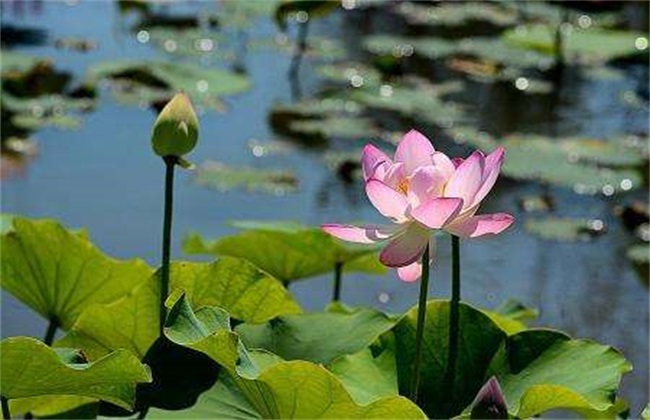
Most lotus flowers bloom successively in summer, from June to September. Some bloom early, some bloom late; the early ones fade while the late ones may just be opening. Even within a single pond, some lotus flowers open first and others later, and they generally bloom continuously for several months. However, in some warm regions, lotus flowers also bloom in mid-to-late May. This is simply because the varieties differ and their environmental requirements vary.
II. Blooming Conditions
1. Temperature
Lotus blooming requires temperatures to rise and stabilize, generally remaining above 22 degrees; once growth and development have progressed sufficiently, the flowers will bloom. It needs relatively high temperatures. Lotus grows in water and is highly adaptable to high temperatures. Temperature directly affects blooming; low temperatures prevent blooming, and low temperatures cause dormancy. However, there are now artificial heating methods that allow lotus to bloom in winter, though this is rare and must be done inside a greenhouse.
2. Environment
The aquatic environment requires clear water quality; it cannot be murky or full of mud. Depending on the variety, choose the planting area accordingly. Common lotus planted in lakes generally has small leaves and small flowers and floats directly on the water surface. When planted in ponds, some float on the water while others stand upright above the surface. Some are suited to deep water, others to shallow water. It is best if there are not too many aquatic plants in the water.
3. Light
Blooming requires ample light and long-day conditions; short-day conditions cannot satisfy blooming. If it is a pond or lake, it needs to be planted in an environment that is not shaded. If grown at home, it should be placed in a spot with plenty of sunlight where it can receive direct light. Receiving light is a necessary condition for blooming.
4. Nutrition
The ponds and lakes where lotus is planted have mud containing large amounts of humus; the remains of some aquatic plants or small aquatic animals decay in the soil, enriching the soil for aquatic plants. So there is generally no shortage of nutrients, but to ensure nutrition for blooming, some phosphorus and potassium fertilizer can be applied.
Lotus blooming requires certain temperature and light conditions; these are the key factors, and the growing environment is a prerequisite for blooming. Blooming times vary from early to late, but as long as they are cared for carefully, they will generally bloom.