Detailed Guide to Crab Claw Orchid Cultivation Methods and Precautions
Crab Claw Orchid (Schlumbergera truncata) is a succulent plant in the cactus family. Although its place of origin is Brazil, it is now fairly common throughout our country. It has very high ornamental value, and also has the effect of clearing heat and reducing swelling, and can be used to treat problems such as sores and swellings. So how should Crab Claw Orchid be cultivated? Below, the editor brings you the cultivation methods and precautions for Crab Claw Orchid. Let's take a look!
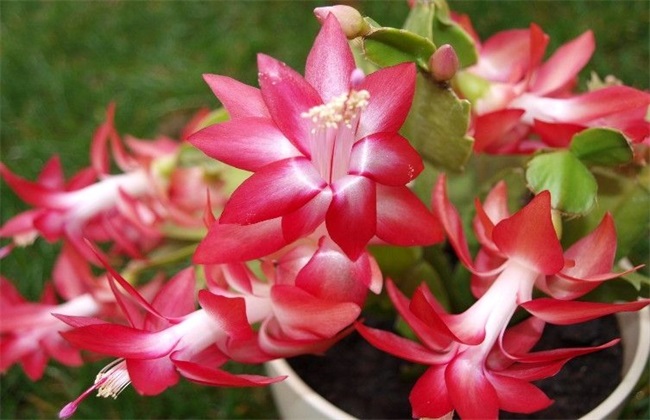
1. Planting Environment
Crab Claw Orchid likes to grow in a warm environment, has a relatively large demand for water, and its cold tolerance is rather poor. So before planting, we should pay attention to the temperature changes in the planting area. Then we should do a good job of choosing the soil; the soil must be guaranteed to have sufficient fertility, good permeability, and remain slightly acidic. If it is cultivated in a flower pot, then first a layer of fine sand should be laid at the bottom of the pot to ensure that the soil can drain normally. During the planting process, support frames should be reasonably set up according to the plant shape of the Crab Claw Orchid to ensure that the Crab Claw Orchid can grow normally.
2. Fertilizer and Water Management
When cultivating Crab Claw Orchid, we must pay attention to controlling the amount of fertilizer and water. Insufficient fertilizer and water will only reduce the growth rate of the Crab Claw Orchid, but excessive fertilizer and water will cause the plant to die. When fertilizing, we should try to avoid using chemical fertilizers, and generally use thin fertilizer water as the main type. After entering the flowering period, the amount of fertilizer and water can be appropriately increased. In summer, good ventilation work should be done, with appropriate shading and reduced watering, to prevent root rot. When watering, water can be sprayed toward the roots of the plant to increase humidity and lower temperature. During the growth period, the soil should be kept moist, and the soil should be avoided from being too dry or too wet.
3. Reasonable Pruning
In spring, after the flowers of the Crab Claw Orchid have withered, short pruning should be carried out from the 3rd node below the spent flower. Then attention should be paid to thinning out some old stems and stem nodes that are too densely grown, to avoid consuming too many nutrients and also to improve permeability. Then some excessive and weak small flower buds should also be removed in time to ensure uniform flower specifications and increase the flowering rate. During cultivation, we should also prevent the stem nodes of the Crab Claw Orchid from overlapping and pressing each other and from becoming scattered, and timely remove some stem nodes with uneven growth, which can effectively improve the overall ornamental value of the Crab Claw Orchid.
4. Precautions
When cultivating Crab Claw Orchid, we should pay attention to controlling the temperature well. The suitable growth temperature for Crab Claw Orchid should be around 25 degrees, and it must not be too high. If it exceeds 30 degrees, then the growth of the Crab Claw Orchid will be obviously hindered. In winter, the temperature should also be kept at around 15 degrees, and at the lowest it must not be lower than 10 degrees, otherwise the Crab Claw Orchid is very likely to die. The temperature must not change suddenly; if the temperature difference fluctuates too much, it is very likely to cause the death of the Crab Claw Orchid. Finally, attention should be paid to doing a good job of preventing and controlling pests and diseases, such as anthracnose and scale insects, to avoid harm and ensure that the Crab Claw Orchid can grow normally.
The above is a brief introduction to the cultivation methods and precautions for Crab Claw Orchid. The cultivation method of Crab Claw Orchid is not difficult; the main thing is to do a good job in some management work to ensure the ornamental value of the Crab Claw Orchid. That is all for today's introduction. This article is for reference only, and I hope it can help everyone!