What are the breeding methods to make red-eared sliders grow fast?
The red-eared slider, also called the red-eared turtle, gets its name mainly because the ear area is quite special and red, hence the name red-eared turtle. Besides being kept for viewing, this turtle also has medicinal and edible value. It is not expensive, easy to breed, and quite common. It is prone to invasion and is considered an invasive animal. But people in China love to keep red-eared sliders, and when breeding them they also encounter the problem of how to raise them so they grow well. Below is a general introduction to the relevant information.
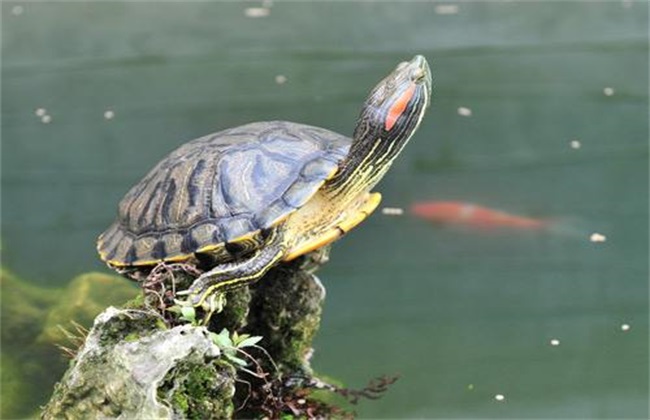
1. Feeding methods
The food fed consists of small fish, small shrimp, and raw meat; these are the main foods eaten, and the nutrition is fairly good. Sometimes you should also buy some nutritional feed for turtles and feed it to them; these can supplement some trace elements and other nutrients. The main thing is to supplement calcium so they grow well. The food should be chopped up and put in directly; the feeding amount is about the amount that can be eaten within 1 hour, and feeding twice a day is enough. If there is leftover food residue, it should be scooped out.
2. Growing environment
As a water turtle, it needs to live in water. The depth of the water should allow it to swim freely, and the space should not be too small. You can keep the turtle in a glass tank, and then the space should be a bit larger, at least enough for it to swim back and forth, with the water above the turtle shell, but not too deep. There must be a place to rest.
3. Growth period
The main growth period is in summer, during the warm season, when the turtle finishes hibernation and begins to eat. At this time, pay attention to feeding some easily digestible and nutritious food. In addition, after a long hibernation, the turtle should be exposed to more sunlight to supplement calcium and strengthen its resistance. Keep the environment clean and hygienic, and change the water at any time; whenever the water quality is slightly unclear, change the water.
4. Dormancy period
Dormancy begins around November. Generally after dormancy begins, it rarely eats or moves, but it does not stay inactive the whole time, or may have some activity. During the dormancy period, pay attention to temperature adjustment; low temperatures will freeze the red-eared slider to death. Water is the main method of heat preservation during hibernation, and water cannot be lacking. In winter, a temperature of around 5 degrees should be maintained, so places with severe winter cold are not suitable for keeping them. In the south, they can be moved indoors for the winter.
5. Precautions
After the hibernation period ends, expose it to more sunlight to sterilize and disinfect. For glass tanks, observe and replace them; they cannot be kept in dirty water. Do not feed raw meat; it is not easy to digest and absorb, the nutrition is insufficient, and it makes them prone to illness. Expensive nutrition cannot be lacking, and feeding cannot be skipped, but also do not feed too much, as they are prone to overeating.
For red-eared sliders to grow fast, the main thing is to grasp the growth period, feed nutritious food, and allow more sunlight. It is best to let them move freely. Get through the dormancy period safely, and do not raise them to a certain size only for them to freeze to death in winter.