Why Are Spider Plant Leaves Turning Yellow? Causes and Solutions
Spider plant (Chlorophytum comosum) is one of the most common plants, and generally it is fairly easy to care for, making it very suitable as an indoor ornamental plant. Sometimes you see someone else's spider plant doing well, while your own spider plant's leaves turn yellow, and you cannot figure out the reason right away. In fact, there are many other causes, and you need to identify them carefully so you can respond better. Let's explore the real causes and solutions together below.
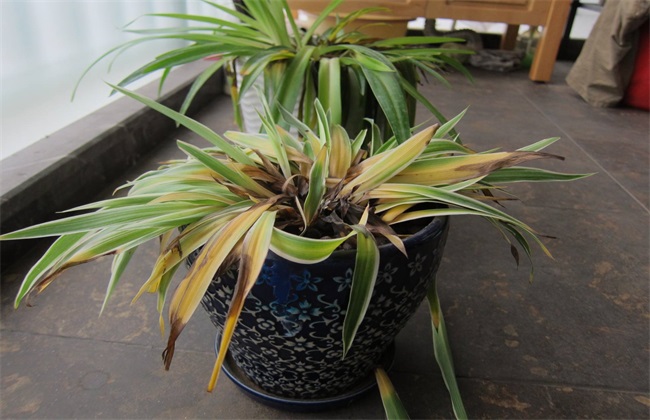
1. Reasonable Fertilizing
If the spider plant's leaves turn yellow, and it is the leaf tips that turn yellow, this indicates over-fertilizing, which has caused fertilizer burn. When nutrients exceed what is needed, over-fertilizing harms the root system, the roots rot and cannot absorb nutrients, absorption weakens, and the leaves turn yellow. In this case, water promptly and stop fertilizing. But sometimes the soil may be low in nutrients and cannot meet the plant's growth needs, so the leaves turn yellow. Therefore, it is best to apply fertilizer on a regular schedule.
2. Water Management
Spider plant likes a humid, cool environment, but if it is humid yet hot, diseases are prone to occur and cause yellow leaves. If the temperature is suitable but there is too much water, the roots suffocate and cannot breathe or absorb nutrients, so the leaves turn yellow. Sometimes when the temperature is high and it is too dry, the soil moisture evaporates and the soil hardens, the roots grow poorly, and the leaves are affected.
3. Receiving Light
Spider plant is a semi-shade-tolerant plant and can grow in an indoor environment, but this does not mean it does not need light. In fact, it needs about 5 hours of light each day, otherwise its chlorophyll will decrease and the leaves will appear to turn yellow. So you can move it out for a period of time each day. Strong light harms spider plant, increasing transpiration, but if water cannot keep up, it easily causes the leaf edges to turn yellow, so be sure to avoid strong light.
4. Adjusting Temperature
In high temperatures, the leaves easily lose water and dry out, especially the basal leaves. Likewise, low temperatures cause cold damage, and after the leaves are frozen, they turn yellow. The best approach is to keep the temperature around 18 to 22 degrees, not lower than 12 degrees in cold conditions, and not higher than 30 degrees in heat. Spider plant likes a cool climate environment best.
5. Pests and Diseases
If the spider plant's leaves turn yellow and none of the above problems apply, it is very likely that pests or diseases have occurred. In fact, pest damage is relatively easy to identify, but diseases may be misjudged. Some pathogens cause root rot after infection, or nematode damage occurs, and treatment should be given promptly.
Spider plant is a very easy plant to grow. When cared for in a semi-shady environment, watered infrequently, and fertilized on schedule, it generally will not have major problems. The main things to worry about are waterlogging, high temperatures, and pests and diseases. So when caring for spider plant yourself, pay attention to these issues.