How to Grow a Monstera deliciosa? Detailed Guide to Cultivation Methods and Precautions
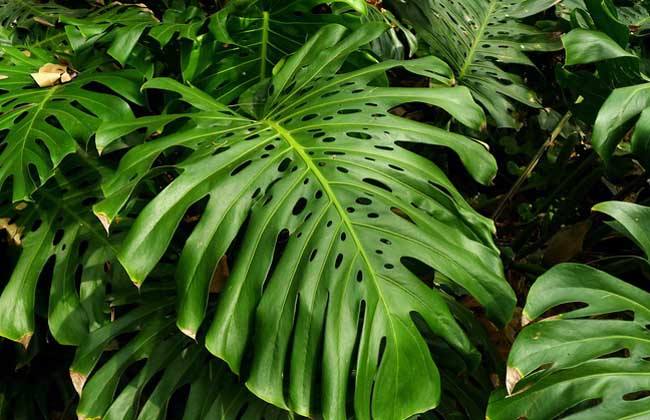
Monstera deliciosa is a plant in the Araceae family, and it is grown outdoors on a very large scale in Guangdong, Guangxi and other regions of southern China. The leaves of Monstera deliciosa are quite unusual, resembling a turtle shell with crisscrossing patterns, giving it very high ornamental value. It is popular with many people and is now one of the main foliage plants grown indoors. So how should you grow Monstera deliciosa? And what precautions should you take? Below, the editor gives a brief introduction for everyone, so let's take a look!
1. Potting Soil
Before growing Monstera deliciosa, you first need to do a good job of choosing the potting soil. If mixing it yourself, base it mainly on garden soil, yellow sand and farmyard manure. Make sure the soil has good permeability and sufficient fertility. Although Monstera deliciosa is fairly common in the wild and has strong adaptability to soil, a good soil can enhance its growth capacity, raise its ornamental value and increase growing returns.
2. Reasonable Watering
When growing Monstera deliciosa, you must do a good job of watering. Monstera deliciosa likes to grow in a humid environment, so water is very important for its growth. You should reasonably adjust the watering frequency according to the changing seasons. For example, in summer, because of the high temperature and fast water evaporation, you need to water once a day. In spring and autumn the temperature is suitable, so you can water about once every 3 days. In winter the growth rate of Monstera deliciosa slows down, so watering about once every 7 days is enough.
3. Light Control
Light also has a certain effect on the growth of Monstera deliciosa. When growing it, be careful to place it in a ventilated and bright spot. But it should not be exposed to direct sunlight, especially in the high-temperature, strong-light conditions of summer, when some scattered light is enough. Avoid sunburn on the leaves, which causes them to turn yellow and reduces their ornamental value. In spring and autumn, you can place Monstera deliciosa in a north-facing spot for care, which can promote its growth.
4. Scientific Topdressing
During the growing season of Monstera deliciosa, apply cake fertilizer water as a topdressing about once every 2-3 weeks. Also appropriately spray foliar fertilizers such as potassium dihydrogen phosphate to strengthen the leaves' growth capacity, about once every 10 days, to encourage the leaves to grow larger and thicker and become more glossy. Monstera deliciosa has a fairly large demand for nutrients, but you must also control the amount used to avoid undesirable problems such as leggy growth and fertilizer burn. Before winter arrives, be careful to appropriately reduce the amount of fertilizer to ensure Monstera deliciosa can safely overwinter.
5. Precautions
Monstera deliciosa generally likes to grow in a warm environment, with an optimum temperature of around 22-24 degrees. If the temperature drops below 10 degrees, its growth rate will become very slow, and below 5 degrees it will suffer cold damage. So in winter you must be careful to control the temperature well. Then, for Monstera deliciosa plants that grow too densely, do a good job of pruning, focusing mainly on overly dense and overly long branches. Old branches at the lower part of the plant should also be cut off in time to avoid consuming too many nutrients.
The above is a brief introduction to the cultivation methods and precautions for Monstera deliciosa. Although growing Monstera deliciosa is fairly simple, you must also be careful to control the growing environment, such as light and temperature, to promote its growth. That is all for today's introduction. This article is for reference only, and we hope it can help everyone!