How to Grow Anthurium? Detailed Guide to Cultivation Methods and Precautions
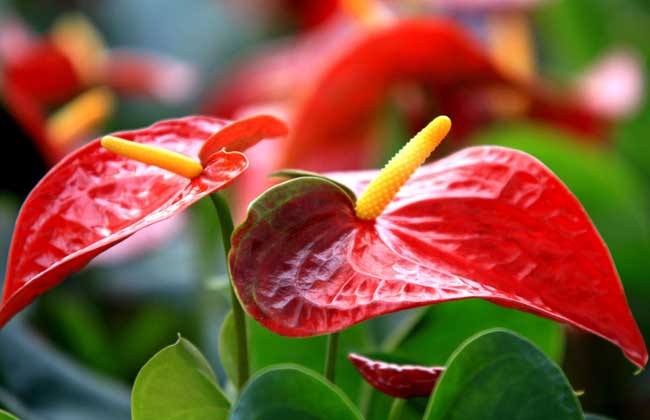
Anthurium, also known as flamingo flower, is a perennial evergreen herbaceous plant in the Araceae family. Anthurium flowers have very high ornamental value and a relatively long blooming period. Moreover, anthurium can effectively absorb waste gases such as ammonia and formaldehyde. It can also help maintain indoor air humidity and prevent the air from becoming too dry. So how should anthurium be grown? Below, the editor brings you the cultivation methods and precautions for anthurium. Let's take a look!
1. Preparation Before Planting
To plant anthurium, we first need to prepare a substrate with good drainage and irrigation. For large-scale cultivation, peat, perlite, and similar materials should be mixed into a suitable substrate. The substrate pH should be maintained at around 6, and the temperature should be controlled at 25°C. It should also be noted that anthurium has relatively poor tolerance to strong light. Throughout the year, it should be cultivated in a place with good shading. This is especially true in spring, summer, and autumn when light is stronger, and in summer the shading rate should be maintained at around 70%. Direct sunlight can cause leaf scorch, fading, and other adverse phenomena, reducing leaf growth rate.
2. Reasonable Watering
The water requirements of anthurium change with its growth stage. During the seedling stage, the root system of anthurium is not well developed and is widely distributed, so its drought tolerance is relatively poor. Therefore, after planting, it should be watered about twice a day to keep the substrate moist and promote the emergence of new roots. During the large seedling stage, the plant grows faster and has a greater demand for water, so sufficient water must be ensured. After entering the flowering stage, watering should be controlled to increase the flowering rate. Then appropriate misting should also be done to raise humidity and enhance the growth capacity of anthurium.
3. Scientific Fertilization
The topdressing method for anthurium is mainly root topdressing, because anthurium leaves have a waxy layer and cannot absorb foliar fertilizer well. When topdressing, the principle should be regular and quantitative application. The topdressing cycle should be reasonably adjusted according to weather changes. For example, in autumn, topdressing is done about once every 3 days. In summer, it can be done about once every two days. The fertilization time is mainly determined by the climate and environment. It is usually applied between 8:00 and 17:00 each year, which can ensure that anthurium absorbs fertilizer well.
4. Precautions
When planting anthurium, we should pay attention to controlling the temperature well, generally adjusting it reasonably according to the climate. Usually on cloudy days, the temperature should be controlled at around 19°C, and the humidity should be maintained at around 75%. On sunny days, the temperature should be controlled at around 25°C, and the humidity should be reduced by 5%. The maximum temperature must not exceed 30°C, and the minimum humidity must not be lower than 50%. Then, when the anthurium plant sprouts a large number of small suckers, attention should be paid to properly removing the buds to prevent them from competing with the mother plant for growth nutrients, damaging the plant shape of the anthurium, and reducing its ornamental value.
The above is a brief introduction to anthurium cultivation methods and precautions. The cultivation method of anthurium is not difficult. The main thing is still to manage it well so as to improve the ornamental value of anthurium as much as possible. That is all for today's introduction. This article is for reference only, and we hope it can help everyone!