Yellowing leaves on a Clivia can be solved like this
The Clivia (Clivia miniata), just like its name suggests, is like a modest gentleman, especially endearing, and has excellent ornamental value whether or not it is in bloom, so many people grow one in a pot. But during cultivation you often run into unsatisfactory situations, such as Clivia leaves turning yellow, which is quite common and very frustrating. So what causes Clivia leaves to turn yellow? Let's find out together.
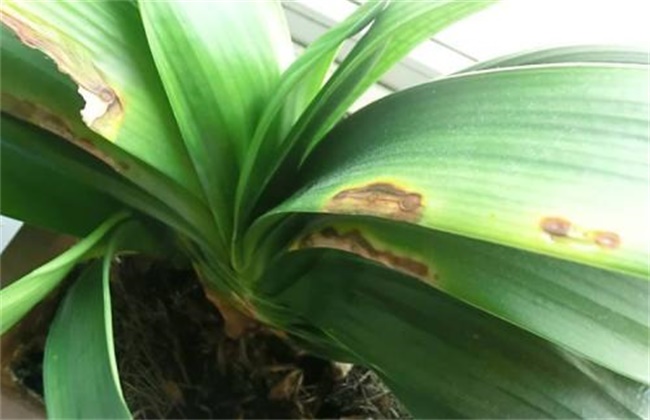
1. Unsuitable lighting
The Clivia is naturally fond of a semi-shaded environment and hates direct strong light. If it is grown in a strong-light environment, especially placed in a sunny spot in summer, it is very prone to sunscald. If it is kept in a hidden place for a long time, where it gets no light or very little light, the leaves will also turn yellow-green or yellow. So in summer, be careful to place the Clivia in bright, indirect light; in spring and autumn, give it more light; and in winter, strengthen the lighting so it grows smoothly.
2. Improper soil
The Clivia has certain requirements for soil. If it is planted in heavy clay soil or soil containing a lot of calcareous matter, the soil's physical and chemical properties are poor, and its permeability and drainage are relatively bad; combined with improper watering and fertilizing, this very easily causes root rot in the Clivia, which in turn makes the leaves turn yellow. Sometimes, if insufficiently decomposed farmyard manure or organic fertilizer is used, it ferments and gives off heat after being applied, burning the roots and causing the leaves to gradually scorch. So the soil used for planting should preferably be a loose, fertile, well-drained, well-aerated, slightly acidic soil.
3. Improper fertilizer and water
During cultivation, potting soil that is too dry or too wet can both cause yellow leaves; especially when it is frequently too wet, it causes the leaves to turn yellow and scorch. When frequently sprinkling water or washing dust off the leaves, if water repeatedly gets poured into the new leaves, this will also cause the new leaves to rot and scorch. When too much, too concentrated, or undecomposed fertilizer is applied as a top dressing, the roots cannot absorb it, causing root burn, and the leaves will also become scorched and yellow. When applying liquid fertilizer, if the fertilizer solution accidentally drips onto the plant and leaves and is not washed off in time, it will also cause yellow spots and scorching on the leaf surface.
4. Temperature too high or too low
When the temperature exceeds 30°C, the air is dry, and no cooling and humidifying measures are taken in time, plus poor ventilation, all of these very easily cause the Clivia to develop yellow leaves. In winter, when the temperature is too low, the plant is directly hit by cold wind and suffers cold damage, and the leaves also turn yellow and gradually scorch. The above several causes are also accompanied by ulcer-like symptoms, which are caused by leaf spot disease from a pathogen infection, so the temperature must be well controlled.
The above is an introduction to what to do when Clivia leaves turn yellow. I hope it helps you. To learn more related knowledge, please follow us.