Detailed explanation of key points of yak breeding technology, master scientific feeding and management methods
The yak is a relatively common bovine animal in China. With the development of China's breeding industry, the breeding area for yaks is now growing larger and larger. However, due to regional restrictions, many people do not have a mature breeding technique, so it is very easy for breeding to fail. So today, the editor brings you the key points of yak breeding technology. Let's take a look below!
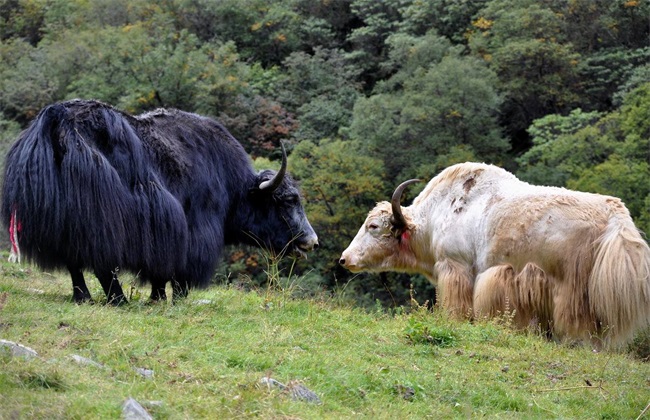
1. Herd division
Breeding yaks is the same as breeding ordinary cattle. First of all, we need to do a good job of dividing the herd into groups. Yaks should be classified according to various factors such as age, sex, and growth ability. The entire yak herd should be divided into different groups such as breeding stock, meat use, milk use, and young cattle. Mixed-group breeding must not be carried out. If large and small animals are raised together, it is easy for the large ones to bully the small ones. This will have a relatively large impact on yak fattening, marketing, and so on, and breeding benefits and efficiency will also decline as a result.
2. Pasture division
After completing the herd division, the pasture division work must be done well. We should choose at least two different pastures according to weather changes, namely the warm season and the cold season, corresponding to summer and winter. The summer pasture must ensure a certain altitude, with clean and pollution-free forage grass and sufficient clean water sources nearby. The winter pasture should be chosen at a place with not high altitude, with good transportation, and able to effectively avoid wind and rain. Reasonable planning of pastures is very key to the healthy growth of yaks throughout the year, and also directly affects the normal fattening of yaks.
3. Shed and pen construction
Shed and pen construction is also a very important part of yak breeding. Generally, the construction materials for yak pens can be mud, and cattle humps can be used to build manure pens. Such sheds and pens have relatively long durability, can also ensure the normal growth of yaks, and are low in cost, allowing temporary facilities to be built anywhere. Moreover, local materials can be used according to the local environment, building with various trees or turf. Although the durability is relatively poor, it is still feasible. When building yak sheds, it is essential to adapt measures to local conditions.
4. Disease prevention and control
Finally, of course, there is the disease prevention and control work for yaks. Although yaks have relatively strong disease resistance, we must still carry out strict epidemic prevention every year according to the immunization process. For example, yaks should be regularly and purposefully injected with vaccines such as anthrax spore vaccine to enhance their physique and improve immunity. Then management should be strengthened, prevention work should be done well, and the healthy growth of yaks should be ensured. When it is found that some yaks are sick, they should be isolated and examined in time, and then the entire cattle farm should be comprehensively disinfected.
The above is a brief introduction to the key points of yak breeding technology. The breeding areas for yaks are still not very wide now, but the number is relatively large, and demand is great. However, everyone still must not breed blindly, and should learn more before breeding. That is all for today's introduction. This article is for reference only, and I hope it can help everyone!