How to grow a Buddhist pine? Detailed guide to cultivation methods and precautions
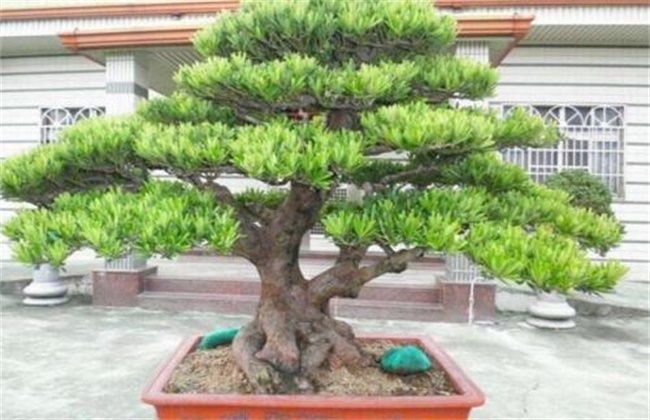
The Buddhist pine is a type of pine tree, also known as Luohan fir, evergreen Luohan fir, tu shan, and money pine. It is an evergreen tree that can reach up to 18 m in height, and is often kept low through pruning. Its appearance resembles a bald monk wearing a red robe, which is why it is called Buddhist pine. It is currently one of the common ornamental plants, so how should the Buddhist pine be grown? What should be noted? Let's find out together.
Cultivation methods
1. Soil
The Buddhist pine grows slowly and has a long lifespan, reaching several hundred to over a thousand years. It is not suitable for planting in alkaline soil, which will cause its leaves to turn yellow. It is best to choose slightly acidic soil rich in humus, loose and fertile, and well-drained for cultivation.
2. Temperature
The Buddhist pine is a neutral to shade-tolerant tree species, suitable for growing in environments where the temperature is stable above 10 degrees. In summer, when temperatures are high, appropriate shading is needed to prevent wilting caused by water evaporation. In winter, when temperatures are lower, insulation measures should be taken and watering controlled to avoid frost damage, so that it can overwinter smoothly.
3. Light
The Buddhist pine can accept relatively strong light and can also grow in shaded environments. Although summer temperatures are high and light is intense, if the Buddhist pine tree is tall, strong light is still beneficial for maintaining its tree shape and leaf form, so no shading treatment is needed. However, if it is a small seedling with tender tissues, it should not be exposed to strong light for long periods, and shading treatment should be done well.
4. Fertilizer and water
The Buddhist pine itself is not drought-tolerant; it likes shady and humid environments. During the growing season, it should be watered frequently, but waterlogging should be avoided. On sunny summer days, water once each morning, and also frequently spray water on the leaves so that the leaf color stays fresh green and growth is good. Summer has more cloudy and rainy days, and the Buddhist pine is not tolerant of waterlogging, so long periods of water accumulation that cause root rot should be prevented.
5. Pests and diseases
The main diseases of the Buddhist pine are leaf spot and anthracnose, which can be prevented and controlled by spraying with 50% thiophanate-methyl wettable powder at 500 times dilution, with good results. Pests include scale insects, red spiders, and bagworms, which can be killed by spraying with 40% omethoate emulsifiable concentrate at 1500 times dilution.
Cultivation precautions
The Buddhist pine prefers fertile environments. When growing it, try to choose fertile soil, such as sandy loam and leaf mold, which are best. When growing it in pots, special attention should be paid to keeping the potting soil moist to ensure a sufficient water supply during the growing season. In summer, temperatures are high and water evaporation is large, so it must be watered frequently. In winter, temperatures are low, so watering should be reduced to avoid frost damage. The Buddhist pine likes environments with sufficient light, but dislikes direct sun exposure. Usually it can be grown indoors. In summer, when it is extremely hot and exposed to the sun, special attention should be paid to shading it. When the Buddhist pine grows to a certain extent, its pot and flower pot must be replaced. In addition, special attention should be paid to pest and disease control and pruning work.
The above is an introduction to the cultivation methods and precautions for Buddhist pine. We hope it can help you. To learn more related knowledge, please stay tuned to us.