Detailed Explanation of Prevention and Control Techniques for Black-Bone Silkie Breeding Chicken Degeneration
In the process of raising black-bone silkies, some problems are often encountered, and breeding chicken degeneration is one of them. Breeding chicken reproduction is related to the production and profitability of the farm, so breeding chicken degeneration must be prevented and controlled in a timely manner to ensure the normal growth of black-bone silkies. Below, let's learn together with the editor about how to prevent breeding chicken degeneration in black-bone silkie farming.
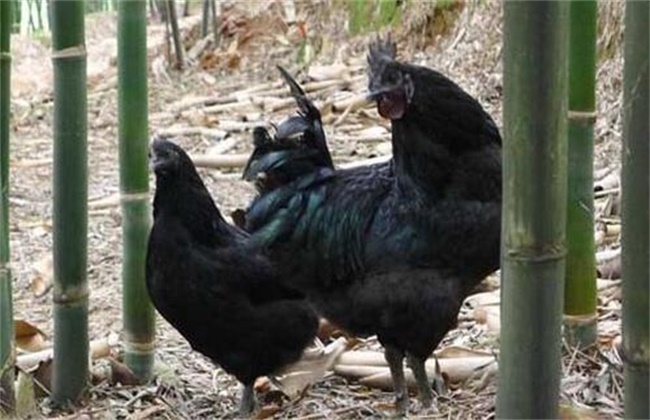
1. Reasonable selection and pairing
Once you have a superior flock of black-bone silkies, if you do not carry out reasonable selection and pairing and instead let them mate randomly and indiscriminately, the offspring produced will not be good. Therefore, within a flock of the same breed, select 1 particularly outstanding male black-bone silkie for every 8-10 female black-bone silkies, one that has unique superior traits, such as strong fertility rate, hatchability, disease resistance, or a distinctive advantage in appearance. Use this male black-bone silkie and select female black-bone silkies with similar characteristics for mating; only then will the production performance of the offspring from such pairing be significantly improved.
2. Purification and selection of the superior
There are many breeds of black-bone silkie. When selecting breeds, choose according to local natural conditions, production performance, high economic value and popularity among the people. Practice has proved that promoting one breed in a region is best, as development is fast, results are remarkable, and mixing is not likely to occur. At the same time, for black-bone silkies with messy colors, particularly early molting, excessively late laying, or excessively small eggs, promptly move them to another group or cull them, so as to avoid affecting the offspring and causing breeding chicken degeneration.
3. Establish good hatching and brooding sites
In areas where black-bone silkies are promoted, key efforts should be made to establish hatching and brooding sites. After introduction, black-bone silkie eggs should be hatched at these sites and raised in a concentrated manner for a period before being sold to farmers for raising. At the same time, farmers should also be taught scientific management and disease prevention techniques for the breed of black-bone silkie, so as to avoid breeding chicken degeneration throughout the region.
4. Strictly select and retain breeding chickens
When the introduced improved breed black-bone silkies reach a certain number, the local inferior black-bone silkies should be gradually culled in a timely manner, from few to many, from male black-bone silkies to female black-bone silkies, until they are all finally replaced by improved breed black-bone silkies. In the process of achieving breed improvement, attention should be paid to strictly selecting and retaining breeding black-bone silkies, especially strengthening the selection, retention and cultivation of breeding male black-bone silkies. At the same time, breed identification work should be carried out, and a breeding system for improved breed black-bone silkie chicks should be gradually established, so that the excellent high-yielding black-bone silkie flock can be maintained persistently.
The above is an introduction to prevention and control techniques for black-bone silkie breeding chicken degeneration. We hope it can help you. To learn more related knowledge, please stay tuned to us.