Scarlet Sage Flowering Time Regulation Methods and Flowering Period Management Tips
Scarlet sage has a very long flowering period, blooming continuously from July to November each year. It is the most common flower used to decorate National Day. Its bright and uniform flowers are long-tubular, connected one after another in strings, like strings of red firecrackers, creating a festive and peaceful atmosphere. In autumn, scarlet sage stands upright among the green leaves, full of vitality, as if a heart immersed in love were burning.
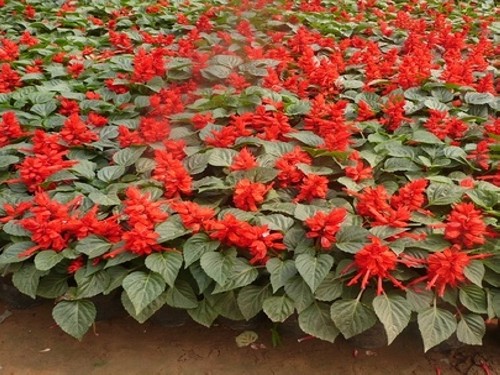
Besides its bright red and gorgeous appearance, scarlet sage also has sweet nectar. There are probably quite a few children who have "tasted" scarlet sage. I remember that when I was little, whenever the scarlet sage at school bloomed, children would crowd around the flower beds in clusters, pull off the flowers at the top, and suck the sweet nectar at the base. Of course, scarlet sage nowadays is mostly planted along roadsides, and the flowers retain a lot of dust and bacteria. Eating them can easily cause gastrointestinal illness. Therefore, it is better to leave the sweet nectar of scarlet sage in childhood memories.
The main methods for regulating the flowering period of scarlet sage include sowing in stages, cutting in stages, and removing buds to control flowering.
1. Sowing in stages
To make scarlet sage bloom on May Day, choose small scarlet sage and sow it outdoors in mid-to-late August of the previous year. In early October, move the seedlings with soil balls into a greenhouse and pot them for maintenance. Keep the room temperature at about 20°C. Do not water too much, to prevent the plants from growing leggy. Light should be sufficient. In mid-to-late April of the following year, they can bloom successively. On May Day, the plants can either be planted in flower beds or displayed in pots. To make it bloom on National Day, choose large scarlet sage and sow it indoors in March-April. After the late frost, move it outdoors for maintenance, pinch it several times, strengthen fertilizer and water management, and it can bloom by National Day.
2. Cutting in stages
Cuttings can shorten the seedling stage and promote earlier flowering. By taking cuttings at the appropriate time according to the desired flowering time, it can bloom as scheduled. Under suitable environmental conditions, scarlet sage can take root in about 3 weeks after cutting, be potted after 1 month, and bloom after about another 2 months of cultivation. For example, cuttings taken in autumn and maintained indoors in winter can bloom in early spring of the following year; cuttings taken in summer from June to July, with strengthened water and fertilizer management, can bloom in the same year. When using cutting propagation to regulate the flowering period, pay attention to shading for summer cuttings. For winter cuttings, the room temperature must be kept at 20°C-25°C, and attention should be paid to keeping the substrate moist at all times.
3. Removing buds to control flowering