The form, habits, care priorities and growing environment of the succulent Yin Dika
Succulent plant - the form, habits and care priorities of Yin Dika!
Chinese name: Yin Dika
Alternative name: Mo Xin
Latin scientific name: Sinocrassla indca
Family and genus: Crassulaceae, Sinocrassula
Place of origin and distribution: South Africa
Yin Dika, a perennial succulent plant also known as Mo Xin, belongs to the Crassulaceae family and the Sinocrassula genus. It is a purple-toned succulent flower. The stem is upright or creeping, with whorled fleshy leaves arranged in a rosette, rhombic or spoon-shaped, with short leaf tips; the blue-green leaves turn brownish-red under sufficient light and a large temperature difference. Racemose inflorescence, small star-shaped flowers, pinkish-yellow, blooming from late summer to autumn each year.
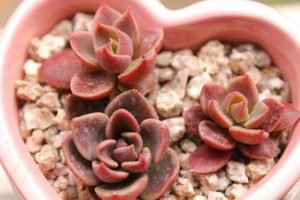
Yin Dika is a very beautiful small succulent. The plant grows upright or creeping, with the leaf rosette in a rosette shape, and it readily forms clusters. The leaves are fleshy and thick, whorled, prismatic (olive-shaped), with an acute leaf tip, a flat surface and a raised back; during the growing season the main tone is green, and in autumn and winter under sufficient light, as the temperature difference increases, the main tone of the leaves gradually turns purple or purplish-red. It blooms from late summer to autumn, with a racemose inflorescence; the flowers open with 5 petals in a regular five-pointed star shape, the staminal filaments are white with dark tips, the pollen is yellow, the upper part of the pistil stigma is 5-lobed and pink, and the flower diameter is 0.4-0.5 cm. Although the flowers of Yin Dika are small, there are many of them, the colors are very rich, and they are also very delicate, very beautiful and very lively, showing that the microscopic world is wonderful too.
The habits of Yin Dika
Yin Dika is robust by nature, likes light, loves dryness and ventilation, is drought-tolerant and slightly cold-tolerant. It is suitable for cultivation in well-aerated sandy soil. It is recommended to grow it outdoors; in winter, except during heavy snow and severe freezing, when short periods of indoor care are needed, it can be grown on a south-facing outdoor windowsill the rest of the time. In summer, when extreme high temperatures occur, ventilation and shading measures are needed; during typhoons and thunderstorms, prevent heavy rain from washing over it and avoid water accumulation in the potting soil. Propagation method for Yin Dika: leaf cuttings or stem cuttings, with a generally high survival rate.
Propagation of Yin Dika
It can be propagated and cultivated by leaf cuttings and stem cuttings; it likes a well-ventilated, warm and dry growing environment and well-drained sandy soil.
I just searched Baidu for how to grow Yin Dika, but no website has published relevant information, which precisely shows that the cultivation of Yin Dika is not very common. However, when everyone sees the introduction in this article, they will presumably no longer have to worry about how to care for Yin Dika. If you want to learn more about how to grow Yin Dika, flower lovers are welcome to add more posts below.