Key points of feeding and management techniques for ostriches at different growth stages
The ostrich is now a relatively large-scale special breeding project in China. Ostrich meat, eggs, skin and feathers all have very high utilization value. Therefore, more and more people are raising them. However, when raising ostriches, we must adjust the feeding and management methods according to the ostrich's growth stage. So today, the editor brings you the key points of feeding and management for ostriches at different growth stages. Let's take a look together below!
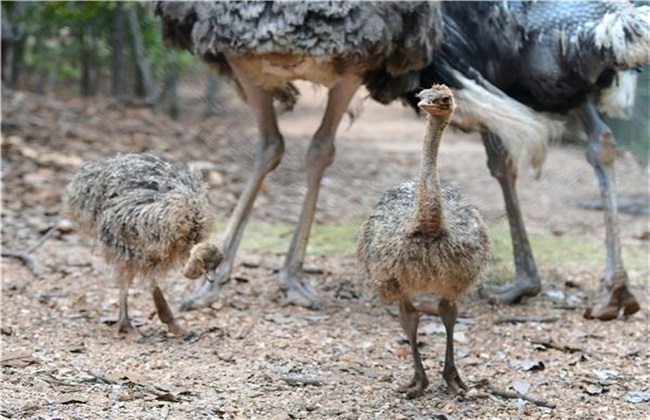
1. Feeding of young ostriches
Young ostriches are mainly raised on the ground, and the ground must be covered with bedding, with soft bedding that has strong moisture absorption as the main choice. Control the breeding density according to the growth time. During the first six weeks, the breeding density should be controlled at about 1.5 birds per sq m. Then, as time goes on, gradually reduce the breeding density and control feeding conditions such as temperature, humidity and light. Also set up a exercise area, with its area kept at about 4 times that of the brooding house, to ensure that young ostriches have sufficient space for exercise. When feeding, the feed must ensure a balanced nutritional ratio and ensure various essential nutrients such as protein and crude fiber, and finally an appropriate amount of high-quality forage grass can be added.
2. Feeding during the growing stage
The growing stage of ostriches is the period from 12 weeks to before the start of laying. Ostriches in the growing stage have relatively strong growth capacity and also have relatively large nutritional needs. Therefore, we must pay attention to doing a good job in feed feeding. In the daily ration of ostriches during the growing stage, it is necessary to ensure various nutrients such as calcium, organic phosphorus and crude protein. Decide whether to use grazing or fenced pen raising according to your own breeding habits. Among them, the proportion of pelleted feed per day should be kept at about 30%, and forage feed at about 70%. If it is high-quality pasture land, then supplementary feeding may not be needed.
3. Feeding during the laying period
Under normal circumstances, ostriches enter sexual maturity at around 20, and at this stage they should be raised in groups, with about 3 birds per group and a male-to-female ratio of 1:2. Promote production and reproduction and increase the nutritional level of the daily ration. Similar to the nutritional ratio of the daily ration in the growing stage, they can also be kept in pens or grazed, with reasonable adjustments according to the local environment and breeding techniques. Each group of ostriches must be guaranteed sufficient housing area and pasture land to promote the growth of ostriches and increase the egg production rate.
4. Feeding of breeding ostriches
One male ostrich with a good physique can be mated with about 5 female ostriches. Female ostriches have a laying cycle, and generally lay about 10 eggs per cycle. Breeding ostriches must be guaranteed sufficient space for exercise to enhance their physique, and there must be no noisy disturbances, and the ground must be kept dry. Then each breeding ostrich's shed must be guaranteed to have about 20 sq m. Avoid the effects of severe weather, and do a good job in hygiene and epidemic prevention for breeding ostriches to avoid harm from diseases. Finally, eliminate male ostriches that have no sperm or poor sperm quality.
The above is a brief introduction to the key points of feeding and management of ostriches at different growth stages. The feeding and management of ostriches is very important and directly affects the output of ostriches, so everyone must pay more attention. That is all for today's introduction. This article is for reference only, and I hope it can help everyone!