How to fatten sheep in summer? Master these practical tips
As the temperature gets higher and higher now, it also means we are gradually entering summer. In the high-temperature environment of summer, if there is no timely handling, the sheep will feel restless, their appetite will drop, and their daily food intake will be far lower than their consumption. This causes the sheep to lose fat severely and affects breeding benefits. So in the high-temperature environment of summer, how should we raise them to make the sheep gain fat? Let's take a look together below!
1. Feeding management
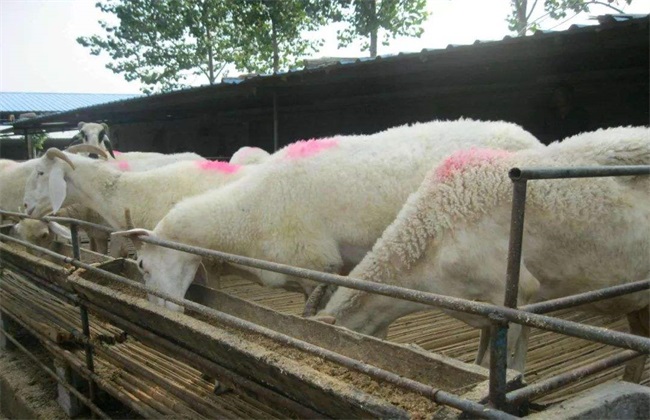
Because of the high temperature in summer, when feeding feed, it should be different from the previous feed. As the temperature rises, we should improve the quality of the feed and feed some palatable, nutrient-rich, high-quality feed. This is especially true for ewes that have not long been weaned and pregnant ewes. We also need to combine it with an appropriate amount of concentrate feed, and we should reasonably adjust the proportion of concentrate feed according to the growth stage of the sheep. An appropriate amount of salt can be mixed into the feed to ensure the pH balance of the sheep's body. Also, in summer, make sure the water trough always has enough clean water to prevent the sheep from being short of water.
2. Temperature and humidity control
The temperature and humidity in summer are relatively high, which not only affects the growth of sheep and causes stress reactions, but also reduces the sheep's appetite. So when raising sheep in summer, we must control temperature and humidity well and take good shade and sun protection measures. Some trees can be planted around the sheep shed for natural shading, or spraying inside the sheep shed can be used for cooling. Improve the ventilation and air permeability inside the sheep shed and ensure there are enough vents to allow air convection. In summer, be sure to keep the temperature in the sheep shed at a suitable level, not too high, and keep the sheep shed dry to promote healthy growth of the sheep.
3. Shearing work
Wool is mainly used by sheep for warmth in winter, but in summer, if there is too much wool, it will become a burden to the sheep. So in summer, we should carefully check the wool growth on each sheep. If there is too much wool, then it should be cut off in time. If the wool is not cut, the sheep's heat dissipation will be blocked, raising the sheep's body temperature and causing stress reactions in the sheep. When shearing, keep the wool on the sheep's belly to prevent the sheep from getting cold when lying on the floor and to avoid adverse phenomena such as diarrhea.
4. Disease prevention and control
Disease prevention and control in summer is also something we cannot ignore when raising sheep. The incidence of disease in sheep in summer is actually relatively high, such as heatstroke and various gastrointestinal diseases. In addition, with the high-temperature environment in summer, after diseases occur, the difficulty of treatment will further increase. Therefore, prevention must be given priority, and the environmental sanitation work of the sheep shed must be done well. Then regularly disinfect the sheep shed, deworm the sheep, and so on, to ensure the healthy growth of the sheep.
The above is a brief introduction to how to fatten sheep in summer. In fact, to put it plainly, it is also that we need to do a good job in management in summer. Only by doing a good job in management can we effectively promote sheep fattening. That is all for today's introduction. This article is for reference only, and I hope it can help everyone!