Detailed Explanation of Key Technical Points for Iris Cultivation and Management
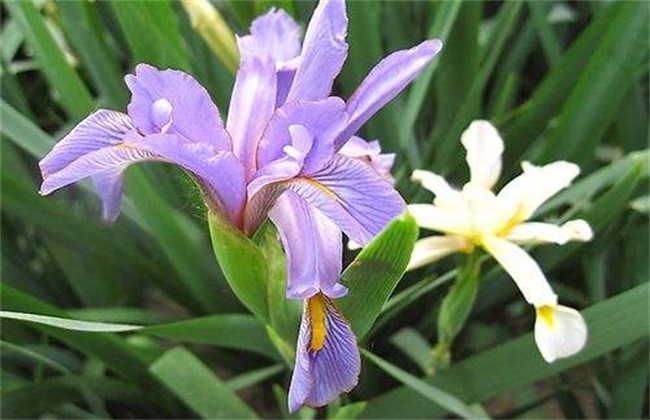
Iris, also known as blue butterfly, wall iris, etc., has a relatively wide distribution range in China. The fragrance of iris is relatively faint, but it smells very pleasant; perfume made from iris as a raw material is very popular in China. Moreover, the rhizome of iris can also be used as medicinal material, with effects such as detoxification and eliminating accumulation, dispelling wind and removing blood stasis. So how should we manage iris when planting it? Below, the editor brings you the cultivation and management techniques for iris. Let's take a look together!
1. Management after planting
After planting iris, pay attention to watering thoroughly, and afterward water reasonably according to the growth conditions of the iris, avoiding soil water shortage and drought. If planting in September, then use a shade net for shading for about half a month. In October, the shading materials should be removed step by step, not all at once, to avoid blind flower phenomenon caused by drastic changes in light. Every evening, pay attention to properly covering with cloth to improve the soil's heat preservation capacity. During the day, do a good job of ventilation to prevent the temperature from exceeding 25°C.
2. Temperature control
Temperature is very important for the growth of iris. After planting, the soil temperature should be controlled at around 5-20°C. Soil temperature has a direct impact on the emergence rate of iris. If the temperature is too low, it will also reduce the flowering rate of iris, so after planting, the soil temperature should be controlled at around 17°C. We should adjust the temperature reasonably according to the planting method. For example, when cultivating in a greenhouse, control the temperature at around 15°C; in weak-light seasons such as autumn, in order to avoid iris flowers withering, lower the greenhouse temperature to around 12°C. Then when cultivating in open fields, the temperature should be controlled at around 17°C, and in high-temperature seasons, proper shading should be provided.
3. Pay attention to weeding
Weeds have a very large impact on the growth of iris. If weeds appear after planting iris, then weed promptly. However, when using herbicides, be careful not to cause harm to the iris. It is necessary to ensure that the bulbs are buried deep enough that the herbicide cannot penetrate before use, so ensure that the young buds sprouting from the bulbs are at a depth of at least two cm. Before the plants have grown leaves, small weeds can be appropriately sprayed with herbicides, and the types of herbicides should be appropriately changed to avoid weeds developing resistance. Then in the morning of the second year, pay attention to washing the plants to avoid pesticide residue.
4. Overwintering management
The cold resistance of iris is actually relatively strong, but when we prepare for overwintering after planting, due to differences in varieties and regions, overwintering management work should still be done well. During overwintering, pay attention to doing a good job of warming and insulation measures to protect the iris through the winter successfully. If planting in the north, then we should cover the soil with some materials such as rice straw to increase soil temperature. In the second year when the environment is suitable in spring, the bulbs begin to renew; at this time, appropriate topdressing should be applied to improve nutrient accumulation and promote the growth of new bulbs, but the amount should be controlled well to avoid fertilizer damage.
The above is a brief introduction to iris cultivation and management techniques. The management work for iris is very important. When planting, we should reasonably adjust management methods according to the growth stages of the iris to promote its growth. That's all for today's introduction. This article is for reference only, and I hope it can help everyone!