What are the precautions for feeding pigs with distillers grains? Pig farmers should master these points
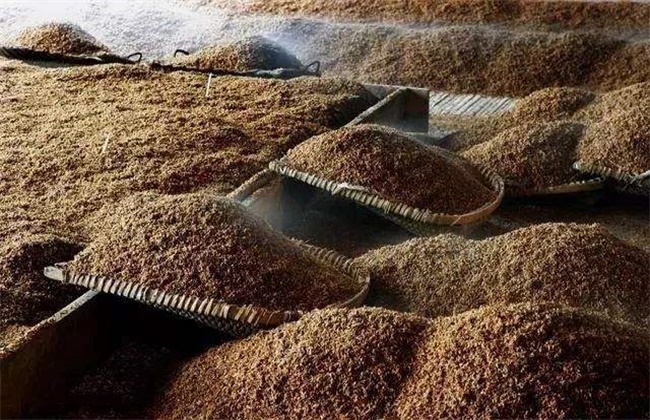
Distillers grains are the residue left after brewing grains such as rice, wheat and sorghum. They are rich in nutrients and high in protein, making them a high-quality feed for pig farming. Many pig farmers use them to feed pigs, but distillers grains cannot be fed casually. So what should be noted when feeding pigs with distillers grains? Let's take a look together at the precautions for raising pigs with distillers grains.
1. Not suitable for feeding alone
Distillers grains contain relatively few nitrogen-free extractives, so the quality of their crude protein is far inferior to that of the feed produced, and they lack nutrients such as carotene, vitamin D and calcium. Therefore, when feeding distillers grains, they should be properly paired with feed such as corn and soybean cake to supplement the lacking nutrients, increase the growth nutrition of pigs, and avoid constipation and indigestion.
2. Not suitable for direct feeding
Before feeding distillers grains, they should be heated so that the alcohol in them evaporates properly. If the distillers grains show fermentation, an appropriate amount of lime should be added to neutralize the acidity and alkalinity. If they have already become moldy, they should be dealt with promptly and are not suitable for direct feeding. At the same time, attention should be paid to the feeding amount. Fresh distillers grains generally should be kept at 25% of the feed, and if dried, this should be reduced to about 10%. Too much is bad for the growth of pigs.
3. Pay attention to feeding frequency
When raising pigs with distillers grains, it is not suitable to feed them every day; attention should be paid to the feeding frequency. First, you can feed continuously for about 10 days, then leave an interval of about one week before feeding again. If fed for a long time, the pig herd may show chronic poisoning. In addition, feeding should mainly be done by rotation, that is, when feeding this pen, the other pen should stop being fed for a week before feeding again.
4. Do a good job of storage
If the distillers grains have not been fully fed, an appropriate amount of rice bran should be added reasonably according to the moisture content of the distillers grains, and then they should be put into a cellar for storage. Alternatively, pour the chives with relatively high moisture content into a container, let the residue slowly settle down, then remove the clear water, and put them into a new trough. If this is repeated several times, the sediment will gradually form a paste, and then they can be used to feed pigs for a long time. However, at the last settling, pay attention to the accumulated water on the upper layer, so as to prevent air from entering and causing the distillers grains to spoil.
The above is an introduction to the precautions for feeding pigs with distillers grains. We hope it can help you. To learn more related knowledge, please keep following us.