Key Technical Points and Detailed Methods for Feeding Pigs with Distiller's Grains
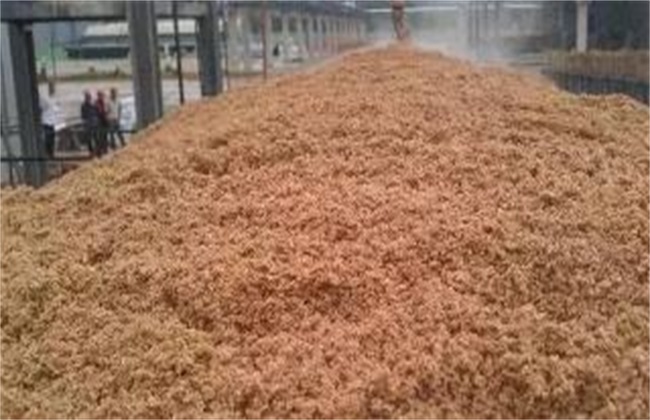
Distiller's grains, also called red grains, are the residue left after grain crops such as rice, wheat and sorghum are used to make liquor. Because rice, wheat and the like can serve as pig feed, these residues are further processed and fermented into feed for raising pigs. The crude protein content can reach nearly 25%. This is very good for raising pigs, so how exactly should distiller's grains be used to raise pigs? Below, the editor will give you a brief introduction. Let's take a look together!
1. Do not feed alone
The nitrogen-free extract content in distiller's grains is relatively low, so the quality of the crude protein is far inferior to that of normal feed. It also lacks various nutrients such as carotene, vitamin D and calcium. Therefore, when using distiller's grains for feeding, we should properly pair them with feed such as corn and soybean cake. Supplement an appropriate amount of calcium and increase the proportion of green feed. This increases the pig's growth nutrition and avoids adverse phenomena such as constipation.
2. Not suitable for direct feeding
Before feeding distiller's grains, they should be heated so that the alcohol in them evaporates properly. If the distiller's grains become sour, then an appropriate amount of lime should be added to neutralize the acidity and alkalinity. If they have already become moldy and deteriorated, then they should be dealt with promptly and must not continue to be fed. Then also pay attention to the feeding amount: keep the feeding amount of fresh distiller's grains at about 25%, and reduce it to about 10% if dried.
3. Feeding frequency
When feeding distiller's grains, we must not feed every day, and we must pay close attention to the feeding frequency. First, we can feed continuously for about 10 days, then leave an interval of about 7 days before feeding again. If fed for a long time, it is very easy to cause chronic poisoning in pigs. However, when feeding, we should mainly use rotational feeding. That is, while this pen of pigs is being fed, another pen of pigs should stop being fed for about a week before being fed again.
4. Reasonable storage
If the distiller's grains have not been finished, then according to the water content of the distiller's grains we should add an appropriate amount of rice bran and the like and store them in a cellar. Alternatively, the distiller's grains with high water content can be poured into a container, letting the residue settle, then removing the clear water, and then putting in new grains. After repeating this many times, when the sediment gradually forms a paste, it can be used to feed pigs for a long time. However, during the final settling, pay attention to keeping a certain amount of standing water on the upper layer to prevent air from entering and prevent the distiller's grains from deteriorating.
5. Points to note
We should reasonably adjust the feeding method and feeding amount according to the pig's growth stage. If they are feeder pigs, then the feed amount can be kept at about 30% of the daily ration. For finishing pigs and piglets, it should be reduced to about 15%. For sows during gestation and lactation, it should be lowered by about another 5%. If fed too much, it is very easy to cause phenomena such as miscarriage and fetal absorption in sows. The piglets born are also very poor in growth and constitution, and it is also not suitable to feed it before boars are collected for semen, so as to avoid reducing sperm quality and fertilization rate.
The above is a brief introduction to the technique of feeding pigs with distiller's grains. In fact, what is said above is also what we need to focus on when using distiller's grains to feed pigs. Feeding pigs with distiller's grains has both advantages and disadvantages. If handled properly, the advantages outweigh the disadvantages; on the contrary, the harm is also quite great, so everyone must pay a lot of attention. That is all for today's introduction. This article is for reference only, and I hope it can help everyone!