What causes soft feet in chickens and how should it be treated?
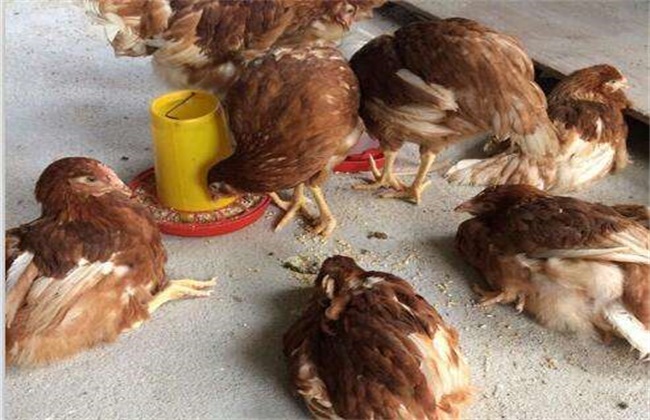
Sometimes newly hatched chicks appear weak in the legs and unable to stand, possibly because their bodies are too weak, and they may recover after a couple of days, but sometimes they remain unable to stand, which points to other problems. Apart from chicks, if adult chickens suddenly develop soft feet and cannot stand or walk, there must be a problem. So with soft feet in chickens, you must first find the real cause in order to treat it according to the root of the problem, and then you will know how to prevent it in the future. So this is the main content of today's article; let's take a look together below!
I. Causes
1. Viral infection
For example, infectious avian encephalomyelitis: after infection it spreads quickly, first the head trembles, then the legs become soft and paralyzed and the bird cannot move, and finally it dies. After infection with Marek's disease, the sciatic nerve is damaged, causing a split-legged hemiplegia, and the legs cannot move. Or Newcastle disease, whose symptoms include lameness and unsteady standing, looking like soft feet.
2. Bacterial infection
With infectious synovitis, the chicken's joints become swollen and walking is difficult. Chickens with avian tuberculosis may move by hopping, with one leg unable to move. Infection with Salmonella or Staphylococcus causes arthritis, which also leads to soft feet, inability to move, or difficulty moving.
3. Parasites
Leucocytozoonosis (Caure's leukocytozoon disease): when this disease occurs, it causes loss of coordination, mild paralysis of the legs, and very little movement. There is also chicken knee mite disease, which often parasitizes within the scales of the feet; in severe cases it causes necrosis of the foot bones and paralysis, and in mild cases the bird cannot stand and the feet are soft.
4. Nutritional deficiency
It mainly manifests as vitamin deficiency; a lack of vitamin B1 and B2 will cause the chicken's legs to become weak and paralyzed, stiff, with difficulty moving, and the legs splayed when walking. Calcium deficiency means the bones are not strong.
5. Improper management
Cold, or excessive humidity, or lack of oxygen will all make a chicken's legs weak and unable to stand. If the temperature is too hot and the environment is not improved, the chicken may develop soft, paralyzed legs; insufficient exposure to light means calcium cannot be absorbed well, resulting in weaker bones.
II. Treatment methods
In the early stage, vaccines for various diseases should be given to prevent disease occurrence. If disease occurs, the corresponding medication must be used promptly for treatment and recovery. Eliminate viruses and bacteria. Normally the chicken coop should be kept clean and disinfected regularly. Deworming should be done at fixed intervals every year to ensure the birds are not harmed by parasitic infestation. From birth, various nutrients should be added to the feed to ensure there is no nutritional deficiency throughout the growth period. In cold weather, heating should be turned on for warmth. In summer, the birds should go out and move around often, receive sunlight, and dissipate heat. By doing the above work in a targeted way, it should be possible to prevent soft feet in chickens, or to promptly improve the condition once it occurs.