Key points of summer chicken incubation technology: how to increase the hatching rate
In the past, farm families hatching chicks generally chose spring, after the temperature rose, but when the temperature and humidity were not very high, to hatch chicks, or they hatched chicks during the mild autumn period. But in today's market, which operates at any time, hatching chicks must be carried out in all four seasons. Generally, a suitable environment is created to ensure that incubation proceeds normally. So when hatching chicks in a man-made small environment, what conditions need to be created to ensure the hatching of the chicks, and how should the survival of the chicks be ensured after hatching? This article mainly discusses this part of the content.
1. Preparatory work
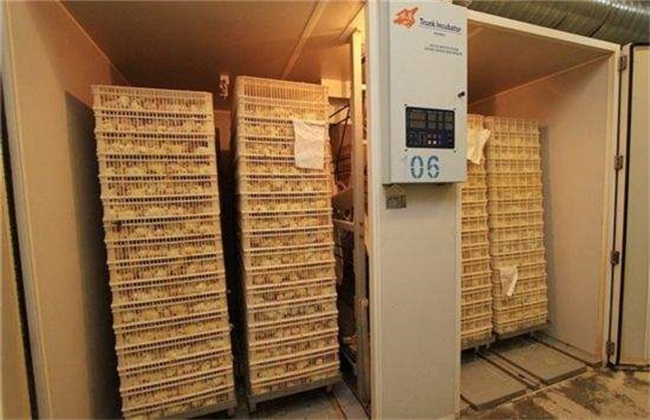
First, select eggs with good fertilization. Generally, you can hold them under a light to see whether they are fertilized. A fertilized egg will have a nearly round small black dot, and such eggs can be used for incubation. In addition, choose larger eggs with relatively hard shells. After that, prepare an incubator. There are generally vertical incubators like refrigerators. They need to be cleaned and disinfected, then the eggs are placed layer by layer in egg incubation trays and put inside. After that, control the temperature well, at about 30 degrees, and you can wait for incubation. A single-layer incubator is operated in the same way.
2. Incubation methods
Incubation can actually be natural incubation, that is, incubation by a hen. Most of the process of hen incubation proceeds naturally. In current farming, however, artificial incubation is used. In the incubation process, the most important things are temperature control and humidity control. Generally, the temperature should be controlled between 30 degrees and 35 degrees, which is favorable for incubation. As for humidity, if the incubator remains sealed all the time, the humidity is relatively low, so you can open the door from time to time to let air through and increase oxygen and humidity. After incubating for a period of time, the eggs should be turned so that they are heated evenly. The incubator must always maintain light. Only in this way can incubation succeed.
3. Management work
The main thing is to manage temperature, humidity, light, and air. The temperature is initially controlled at about 35 degrees, and after a period of time it can be lowered to about 32 degrees. The temperature of the incubator cannot reach 40 degrees, nor can it be lower than 30 degrees. Both high and low temperatures are unfavorable for the chicks' development and shell breaking. Normally, the eggs can be sprayed with water once a day, and the water sprayed should be warm water, so as to ensure incubation moisture. Light must be received all day, only then can incubation succeed. Oxygen-increasing equipment can be used for incubation to supplement oxygen. After 4 days of incubation, check at any time. If there are chicks that have broken out of the shell, they must be transferred to the brooding room quickly.
4. Raising chicks
During the transfer of newly hatched chicks to the brooding room, attention must be paid to keeping them warm. The low outside temperature must not affect the chicks. Newly born chicks do not have full feathers, and their down is wet, so they are prone to catching cold and dying. First dry the chicks' feathers. The brooding room should maintain a temperature of 28 degrees, and then the chicks should be placed in a place padded with soft material. As the chicks continue to grow, the temperature can gradually be lowered to the normal indoor temperature, but in winter a stove still needs to be provided for heating. After three days, feed them a little concentrated feed. After two weeks, gradually add things like vegetable leaves. After one month, feed them normally. After winter has passed, let them go outside for activity.
When hatching chicks in winter, because of the influence of temperature, there are many points that need attention. Therefore, special attention must be paid to details. All necessary influencing factors must be done as well as possible, providing the most suitable environmental conditions for incubation, so that the hatching rate can be ensured. After hatching, management work must also be done well, so that the survival rate can be ensured.