Key Technical Points and Feeding Management Methods for Raising Wild Ducklings
Wild ducks generally refer to the mallard, which is also a waterfowl. There are roughly a dozen or more varieties. They are skilled fliers, capable of long-distance migration, fond of living in water, and excellent swimmers. They have small, light bodies and their meat is highly nutritious and good in taste, making them the favorite duck for farming on the breeding market. Artificial domestication has also been carried out for a long time. Now, the main focus of our article is how to raise the ducklings hatched from these wild ducks to ensure their survival.
I. Building the Brooding Room
Newly hatched ducklings must be raised in an independent brooding room, so a breeding facility must first be built. You can build a brooding room of 2 sq m, lay a moisture-proof mat on the ground, place bedding on top of it, and then install a relatively low hanging lamp on the ceiling of the brooding room. Heating equipment should also be installed.
II. Brooding
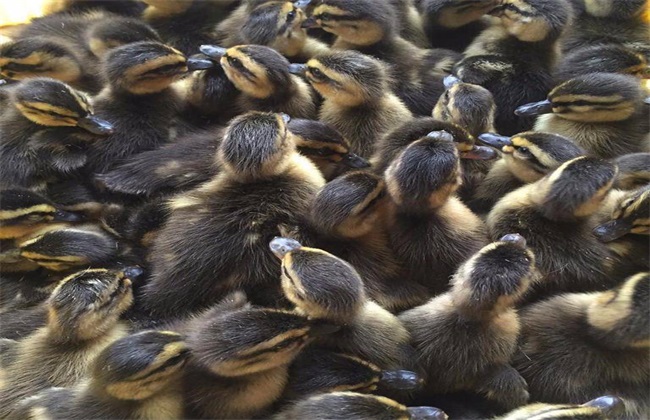
Right after hatching, once the down is dry, put the ducklings into the brooding room, then place about 50 ducklings in each room. Do not put in too many, because ducks like to huddle together and are prone to squeezing and piling up, which can cause some ducks to be injured or crushed to death. After placing them in, adjust the temperature to about 25 degrees and keep it constant, because at this time the ducks have poor insulation. On sunny days, provide ventilation to avoid the accumulation of stale air.
III. Feeding
Generally, feeding should begin when the ducklings start pecking at the ground and show a desire to eat, which is about one to two days after birth. Feed them fine feed, 3 times a day, about 20 grams each time. After three days, feed them 5 times a day, 30 grams per feeding. After one week, add finely chopped green feed mixed with concentrated feed, and then begin feeding 5 to 6 times a day. At this time their appetite increases greatly, and they are in the rapid-growth stage. After one month, reduce to the normal feeding frequency of three times a day, about 80 grams to 100 grams per feeding. During the day, often scatter some vegetable leaves for the ducks to eat freely, and provide drinking water, changing it every day and placing it in the brooding room.
IV. Entering the Water and Release for Rearing
After the ducks grow to two weeks old, they can begin to tentatively enter the water and swim a little, as adaptive training for swimming. Generally, wild ducks are very good in the water and like water, and water is their best growing environment. First gently place them into a water basin and train them for a few days. Once they can do it, drive them to the river for release and rearing. After observing that they swim and play normally, you can safely release them for rearing. Release them on sunny and warm days every day, not when the temperature is low or when it is raining. The protective netting over the water surface should be more than 2 m high to prevent the ducks from flying away. You can clip part of the feathers on their wings.
Wild ducks are ducks that are good at flying and fond of water, so the breeding activity area should be relatively spacious, with enough room for activity. More time in the water for rearing helps the ducks grow. Try to provide a good growing environment, as this can increase the survival rate and ensure the healthy growth of the ducklings.