Diagnosis and Treatment of Koi Herpesvirus Disease
KoiKoi herpesvirus disease (KHVD) is an infectious disease caused by koi herpesvirus (KHV). Current epidemiological studies show that the virus infects only common carp and koi. Whether fry, juvenile fish, or adult fish, all can be infected with KHV, with a mortality rate as high as 80%-100%.
I. Incidence
In recent years, koi herpesvirus disease has occurred at high rates in koi aquaculture ponds in Guangdongkoi breedingwith high mortality.
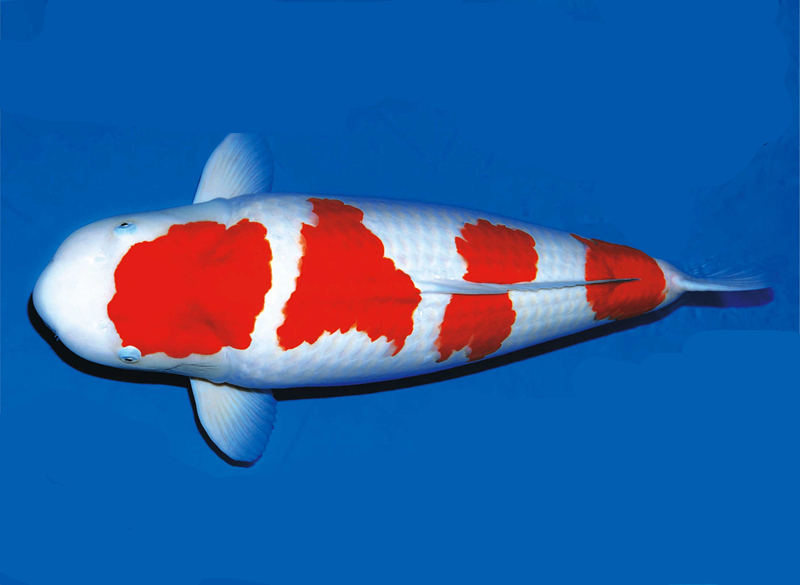
Many koi breeders do not recognize this disease and treat it as an ordinary bacterial disease, resulting in massive koi deaths. In some areas it is simply called "koiplague," and people believe there is no cure once the disease is contracted. In fact, many koi can be saved, and losses can be recovered. To help koi breeders and enthusiasts prevent and better treat this disease and avoid losses, this article is written based on experience in diagnosing and treating koi herpesvirus disease in recent years, to share with everyone.
II. Characteristics of Fish Viral Diseases
Viruses are very clever; viruses have both chemical and biological properties. Fish viral diseases have the following characteristics:
1. Picky about hosts: When parasitizing fish, viruses are very selective about their host and often choose fast-growing, plump fish to parasitize, because plump and large fish are better culture media compared with thin and small fish. Viruses use the host's enzyme system, energy system, transcription system, and so on to replicate large amounts of virus, and a good culture medium allows the virus to replicate more virus per unit time. After a viral disease breaks out, the plump and large fish often die first, and those left are small and thin, and often these fish are also deformed (such as spinal curvature and tail deformities).
2. Strict disease onset temperature range: Viral diseases have very high requirements for temperature range, with the peak of onset at a water temperature of about 25°C. If the water temperature suddenly rises to 35°C and is maintained for 24h, many symptoms may all disappear; if the water temperature suddenly drops to 15°C and is maintained for 24h, many viral disease symptoms will also disappear and mortality will drop greatly. Treatment of viral diseases must take weather into account, paying attention to weather changes.
3. The organs of viral proliferation and the effector organs may be different: The organs of viral proliferation in fish viral diseases are often the kidney and spleen, but the effector organs are often the skin, liver, and so on. When observing fish viral diseases, one must look at the spleen and kidney.
III. How to Simply Determine Koi Herpesvirus Disease
It should be noted that clinical manifestations have a great relationship with the course of the disease, and the clinical symptoms shown differ at different stages of the disease course.
a. Rapid onset, heavy mortality, high mortality rate. Within 1 day, the proportion of fish showing symptoms can rise from 5% to 90%, and mortality can rise from zero to several hundred fish within 1 day;
b. Affected koi float at the water surface, some lurk just below the surface, and some lie on their sides at the surface; affected koi appear listless and stop feeding; behaviorally they may swim without a sense of direction, or float in the water in an upright posture with the head down and tail up, or even stop swimming; if the disease occurs in a cement pond, many koi will be found lying on their sides at the bottom, especially near the inlet and outlet, and some breeders call it "sleeping disease";
c. Affected koi have bleeding on the body surface and localized ulcers; scales are loose, scales fall off, and blood streaks appear on the scales;
d. Affected koi have bleeding on the operculum; when the operculum is opened, the gill filaments are dark red, with gill filament bleeding, tissue necrosis, and necrosis and whitening at the ends of the gill filaments;
e. The fin rays, especially the caudal fin, are severely congested, with partial bleeding, seemingly covered with white mucus;
f. The anus is red and swollen;
g. When the skin is torn open, there are symptoms of subcutaneous congestion and muscle bleeding, with bleeding and congestion distributed more along the muscle spines; because carp have some red flesh under the skin, care must be taken to distinguish red flesh from muscle bleeding;
h. When the abdominal cavity is opened, the blood coagulates very quickly, the amount of blood flowing out is noticeably low and it clots very rapidly, beginning to clot quickly after about 6 seconds of flow, and the blood clotting time is noticeably shorter than in healthy fish; when the heart is cut open, the bleeding is noticeably less than in healthy carp, and the blood clots rapidly;
i. The intestine has no catarrhal inflammation but is congested and red, and the intestine is firm; if fish die with a firm, congested, and red intestine, it indicates that it is not a bacterial infection;
j. The gallbladder of affected koi is shrunken, and the bile color becomes darker;
k. The liver of affected koi has small bleeding points at the edges of the hepatic lobules, surface-active substances are reduced, and the liver is fragile;
l. The spleen has bleeding points, and microscopic examination reveals a small number of internal bleeding points, which are bright red;
m. The posterior kidney is swollen, and microscopic examination shows bleeding points, bright red.
What breeders often report is: the fish lethargy in a, b, c, and e, body surface bleeding, and tail bleeding; other symptoms need to be assessed by fish disease prevention and control personnel.
IV. Analysis of Symptoms
Koi herpesvirus is a virus with strong pathogenicity and high lethality. When the disease occurs, it shows characteristics of rapid onset, high infection rate, and high mortality. After koi are infected with this virus, the disease occurs at suitable temperatures. The virus destroys the nervous system of the fish, leading to reduced activity, loss of balance, and lethargy. The disease breaks out quickly and causes great harm to koi. Koi find it hard to endure, easily scrape and break their skin, and together with rupture of microvessels, this shows symptoms of skin bleeding. Massive bleeding from microvessels causes the koi's blood clotting system to collapse, causing multiple internal hemorrhages and death from multiple organ failure.
V. Time of Onset
It is reported that the optimal laboratory culture temperature for this virus is 21°C, the disease onset water temperature is 18-29°C, and the peak onset water temperature is 22-28°C. The disease occurs mostly in spring and autumn, and in Guangdong it generally occurs in late April and early September. However, the weather in 2008 and 2009 was rather abnormal, and we have already entered a period of climatic chaos. In 2009, some ponds had outbreaks in late October and November, increasing the difficulty of prevention and control.
VI. Prevention and Control
6.1 Prevention
6.1.1 Start prevention 1 month before the susceptible period, that is, begin prevention in March and August; specific measures: feed appropriate drugs (40 kg feed: 3 packs of "Zhixuekuai" + 1 pack of "Like 101" + 1 pack of "florfenicol" + 1 pack of oral drug synergist) to improve the fish body's immunity and increase the content of blood clotting factors in the fish body; every 5 days splash "Youdian" (1 bottle for 1 mu) or "Gaojudian" (1 bottle for 2 mu).
6.1.2 Reduce carp stocking and breeding density, lower yield per unit area, and stop strongly stimulating activities such as seine netting during the susceptible period;
6.1.3 Do not introduce other koi during the disease period. In November 2009, a breeder in Nanhai purchased koi and placed them in a cement pond, and the outflow water entered a koi breeding pond; the next day the koi breeding pond had an outbreak, with heavy mortality;
6.1.4 Do not turn over the pond bottom during the susceptible period. In 2008, a koi breeding pond in Shunde carried out prevention according to the plan we provided and had no outbreak. But in 2009, the plan was still followed, and one pond suddenly had an outbreak. When the author rushed over at night, it was found that the breeder had scooped up the bottom mud to make block-shaped flower fertilizer, turning over the pond bottom, which caused deterioration of water quality and a large amount of virus to be stirred up, leading to the outbreak.
6.1.5 Disinfect vehicles and personnel entering the site with "Youdian"; do not mix production tools among ponds, and disinfect frequently with disinfectants; in the early part of the susceptible period, regularly splash "Youdian" at high concentration on the pond embankments to reduce the possibility of mutual virus transmission;
6.1.6 Choose suitable feed, and 10d before the peak of onset, reduce the feeding amount to 40% of the usual feeding amount;
6.1.7 During the susceptible period, observe fish activity frequently every day, and sample several carp each day for detailed observation.
6.2 Treatment
6.2.1 Confirm that it is this disease
Judge whether it is this disease from epidemiology and disease characteristics, and if a suspected case is found, send it immediately to relevant personnel for confirmation.
6.2.2 Do not use drugs indiscriminately
Do not administer drugs casually. When a viral disease breaks out, indiscriminate medication is taboo and often has the opposite effect.
6.2.3 Treatment plan
Turn on the aerator, ① reduce the feeding amount, oral administration: appropriate drugs (40 kg feed: 3 packs of "Zhixuekuai" + 1 pack of "Like 101" + 1 pack of "florfenicol" + oral drug synergist), to improve the fish body's immunity and increase the content of blood clotting factors in the fish body; ② splashing: use "Bishuishuang" (1 bottle for 1 mu of water surface at 1 m depth) and splash the whole pond, for 3 consecutive days; use "Jingshuibao" (1 pack for 1 mu of water surface at 1 m depth) and splash the whole pond, for 3 consecutive days; on the 3rd and 5th days, use "Youdian" (2 bottles for 1 mu) for splashing disinfection. This plan has a relatively good therapeutic effect, but breeders need to communicate with relevant personnel according to actual conditions.
If there are parasites such as Dactylogyrus on the gills, do not use insecticides at this time. If the water has already turned white, it needs to be reported to relevant personnel.
6.2.4 Disinfect the environment
Strictly control the entry and exit of personnel, vehicles, and equipment; do a good job of disinfecting personnel and tools in the breeding area, using "Youdian" for disinfection; splash "Youdian" at high concentration on the pond embankments multiple times each day to prevent the spread of pathogens;
6.2.5 Watch the weather
If within the next 2 days after the outbreak, the temperature changes sharply by more than 12°C, congratulations, the fish will recover even without treatment. In November 2009, in a breeding pond in Shunde, koi had an outbreak, and a 3-mu pond had 300 fish die each day. I paid attention to the weather; a cold wave from the north was coming, and the temperature would drop by more than 15°C. I told the breeder to use "Bishuishuang" and to use "Youdian" on the 3rd day, and told him it would be fine after 4 days. The next afternoon Guangzhou began to cool, and by the 4th day only 3 fish died, and thereafter no more deaths occurred within 1 month.
But relying solely on weather for treatment, if the water temperature rises again to the virus-susceptible water temperature within 1 month, koi are likely to have another outbreak of herpesvirus disease after about 1 month.
6.2.6 Change the water temperature
For keeping koi in small household water bodies, the method of changing the water temperature can be used for treatment. Place the affected koi separately in anaquariumand slowly raise the water temperature to above 33°C and maintain it for 24h, and the effect is very good; or place the affected fish separately in an aquarium and use ice cubes to lower the water temperature to about 15°C and maintain it for 24h. The disadvantages of this method are: ① household users are not good at controlling temperature rises and drops, causing greater stress and death of the fish; ② it is easy to relapse after 1 month.
It should be reminded that fish after a water temperature change should promptly receive oral administration: appropriate drugs (40 kg feed: 3 packs of "Zhixuekuai" + 1 pack of "Like 101" + 1 pack of "florfenicol" + oral drug synergist), to improve the fish body's immunity and increase the content of blood clotting factors in the fish body. Practice has proved that changing the water temperature + improving the fish body's immunity and increasing the content of blood clotting factors in the fish body can prevent relapse after 1 month.
。