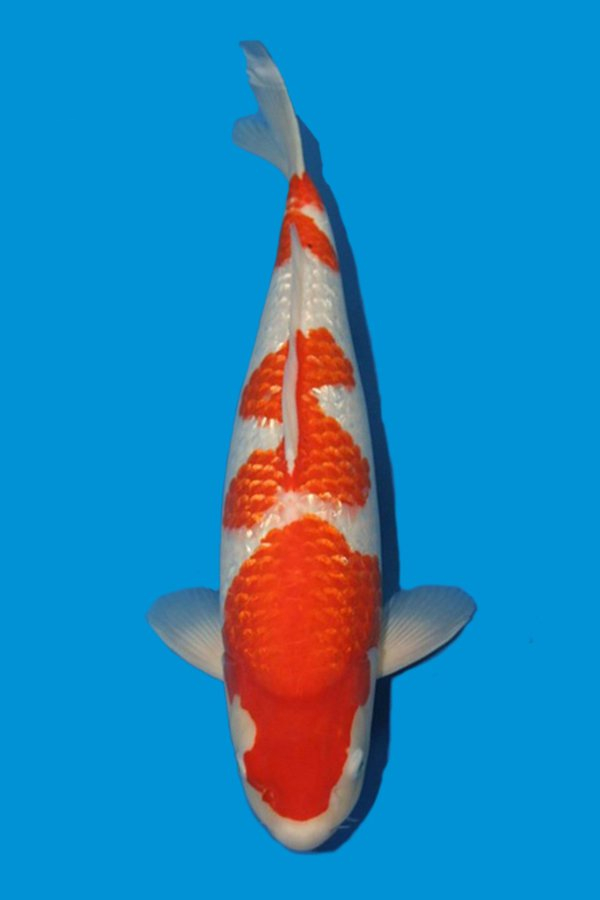
How to distinguish Ginrin Kohaku from Goshiki koi by color
Introduction to Ginrin Kohaku: The so-called Ginrin Kohaku is a Kohaku whose body has gold- or silver-metallic shiny scales. These colored scales are usually most prominent along the back, and when we look down from above, we can see their sparkle at a glance. Ginrin...
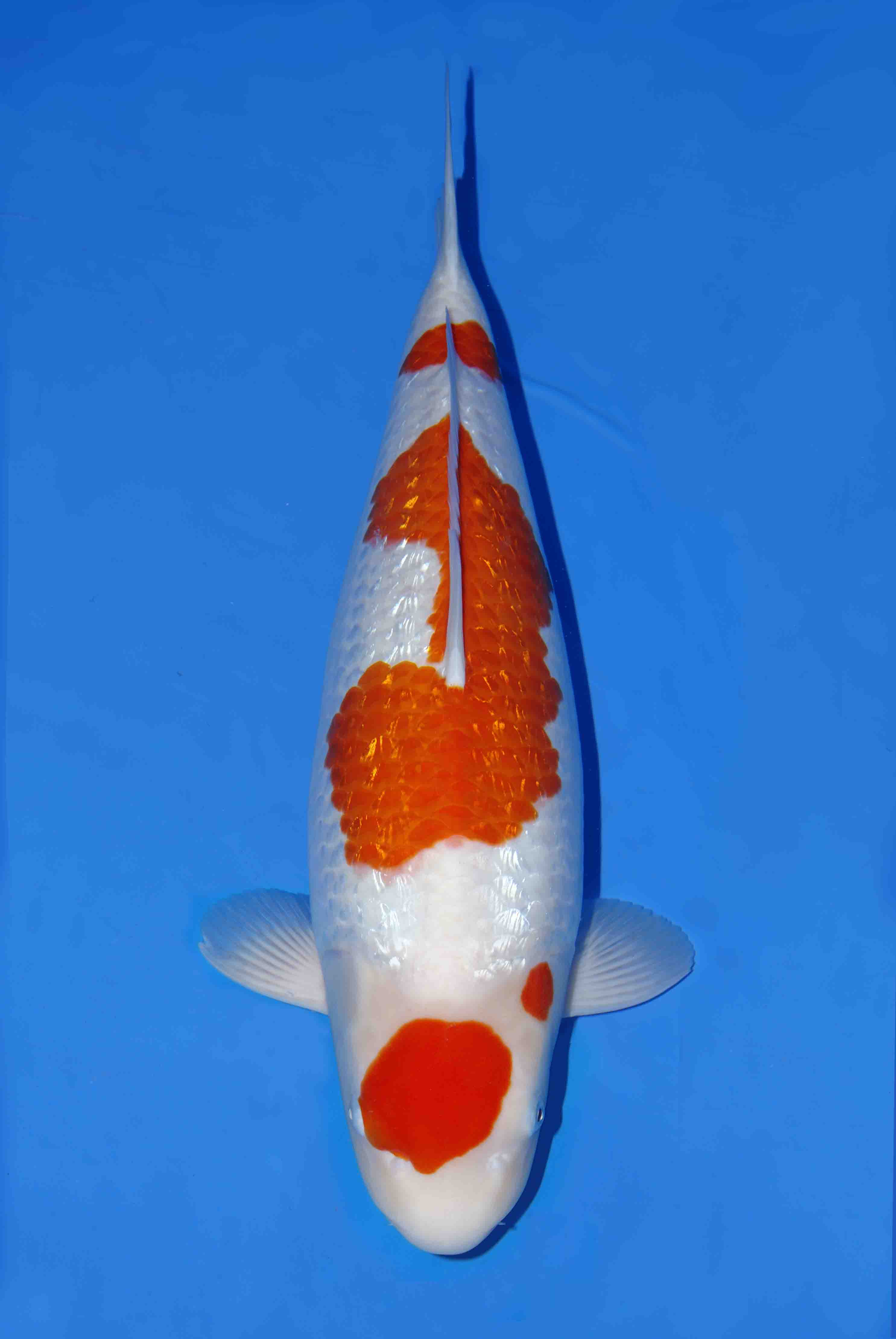
The so-called Ginrin Kohaku is a Kohaku whose body has gold- or silver-metallic shiny scales. These colored scales are usually most prominent along the back, and when we look down from above, we can see their sparkle at a glance. Those whose Ginrin scales are finely concentrated along the back are more beautiful.
The types of silver scales can be broadly divided into two kinds: scales that present individual silver bright spots are called "Tama Gin" or "Pearl Gin"; the other kind, in which the silver parts of the scales form bright bands, is called "Hiroshima Gin" or "Diamond Gin".
⟧
Ginrin Kohaku has no special requirements for the shape of the red patches. However, there are relatively high requirements for the quality of the silver scales themselves and for the overall coordination between the silver scales and the whole red-and-white color pattern.
The distinction between gold and silver scales comes from the difference in where the scales are located: if the scales are on red markings, they show a golden luster; if they are on a white base, they show a silver luster.
The distinction between gold and silver scales comes from the difference in where the scales are located: if the scales are on red markings, they show a golden luster; if they are on a white base, they show a silver luster.
The scales of Ginrin Kohaku must be neatly and finely arranged with a well-formed layout, and must not be scattered, overlapping haphazardly, or lacking in beauty. Many appreciation rules are still shared, such as the color quality of the white base, the size of the red patches, and the clarity of their edges.
Ginrin is regarded as a relatively special type among Kohaku koi. Unlike ordinary Kohaku types that are distinguished simply by the shape of the red patches, such as two-step Kohaku and menkaburi Kohaku, the luster of the scales gives Ginrin Kohaku a more dazzling and distinctive ornamental value.