Tips for Selecting Tancho Kohaku Koi Fry
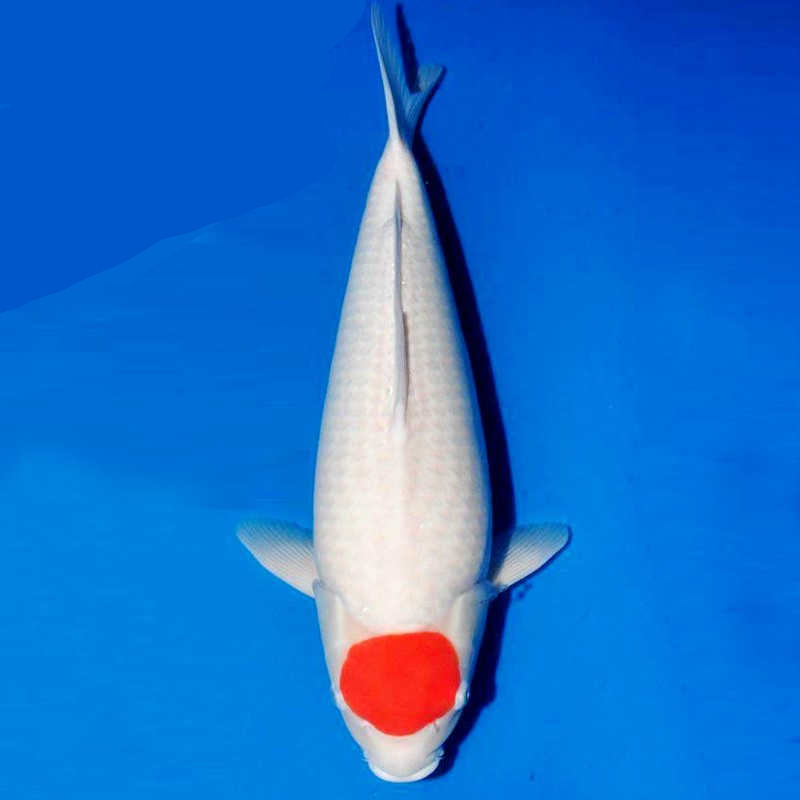
Introduction to Tancho Kohaku Koi. The distinguishing feature of Tancho Kohaku koi is the varied shape of the red patch on top of the head. Besides the round shape, there are also the plum-blossom-shaped "plum-blossom tancho," the heart-shaped "heart tancho," and the "corner tancho," among others. Those with a body entirely snow-white and only a round red patch on top of the head are called "Tancho Kohaku koi."...
The distinguishing feature of Tancho Kohaku koi is the varied shape of the red patch on top of the head. Besides the round shape, there are also the plum-blossom-shaped "plum-blossom tancho," the heart-shaped "heart tancho," and the "corner tancho," among others. Those with a body entirely snow-white and only a round red patch on top of the head are called "Tancho Kohaku koi."
The key point of appreciation must have distinctive features, so that its individual character stands out. For example, the position of the patch on top of the head should be at the very center of the head, not reaching the snout in front, not extending beyond the skull plate at the back, and not reaching the eyes on either side. Only this is a good tancho; otherwise it is a poor pattern, and its quality is greatly reduced.
Koi VarietiesThere are many kinds, among which the one most favored by officials is the tancho, long known as the "official's koi." This koi has an entirely snow-white body, plus a single spot of red on top of the head that does not bleed into the surrounding color. When swimming it is like a white dragon churning the river; when still, it is like the red sun resting on the water. In feng shui it governs flourishing careers and smooth official advancement, and it has the laudatory name "good fortune descends from above."
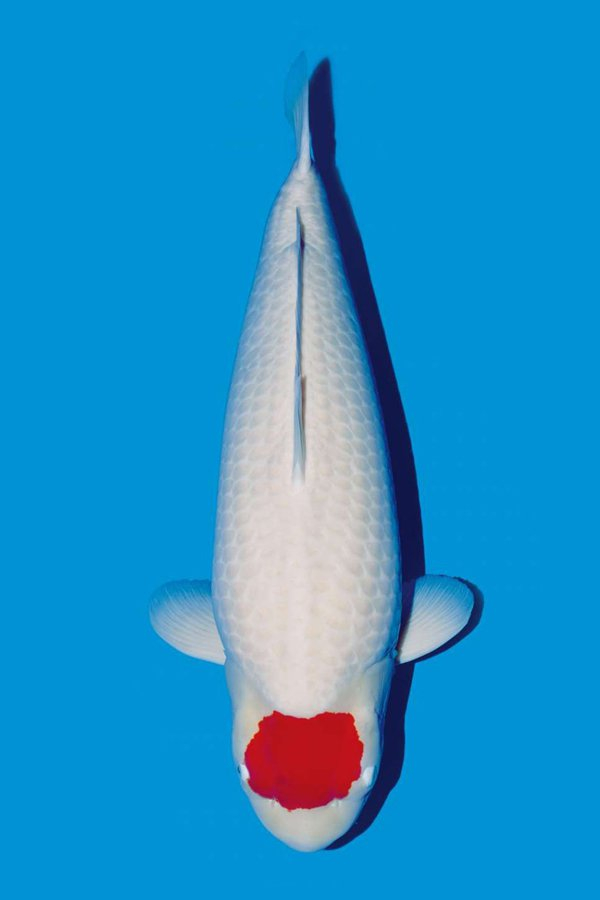
Color quality: Tancho Kohaku should be pure and true in color, and the color quality should be rich and glossy, which brings out excellent luster and makes its color even more gorgeous. If the color is not pure, has mixed hues, and easily bleeds onto the ears or back, then it is not a high-quality color; and if the color is thin and very pale, it is hard for it to show its brilliance.
Swimming posture: whether it is graceful and smooth, robust and powerful. If a koi twists its body while swimming in the water, moving in a snake-like way, or often swims with its body tilted to one side, then such a swimming posture is unacceptable.
Pectoral fins: whether they are powerful when paddling, and whether they appear weak and feeble when at rest;
Caudal peduncle: whether the swinging motion is moderate. If the motion is too small, it appears weak and feeble and cannot show the robust and powerful side of a koi. If the motion is too large, it appears somewhat exaggerated and uncoordinated. If it often lies still and moves very little, then this koi may have somewhat abnormal health, and you should check whether it has already become ill.